Monaro's Mouse Pages
Mouse food and treats
There are many different
foods that mice can eat, they are after all, omnivores. In the wild they
can eat seeds, grains, fruit, grasses, insects and as opportunists, anything
they can get their teeth into really!
Whilst they *can* eat almost everything it does not necessarily mean that they
*should* eat everything! There are foods which are bad for mice, either causing
obesity, digestive upsets, allergies or even death.
There are many commercial
mixes which you can buy at the supermarket or pet store, many are marketed for a
variety of species of rodent rather than being specific to one species.
Unfortunately many mass produced mixes contain ingredients which are
carcinogenic (cancer-causing) or contain allergens, typically in the form of
food colourings (meant to appeal to the pet owner, not the colour blind pet!),
and preservatives to give a longer shelf life. One major contributor to
this is the cat food kibble pieces included in most mixes, whilst mice may eat
it and survive on it, it isn't particularly good for them.
The most basic of mouse foods you can buy is "lab block" which is an all-in-one
feed designed for laboratory animals to ensure a consistent diet, containing the
essential vitamins and minerals to sustain life, but frankly pretty boring for
an animal evolved to forage. Lab block can, however, be useful if you have
a mouse who has allergies to a variety of foods, which can be expressed by
excessive scratching when he doesn't have mites, hives or baldness.
After trying a typical off the shelf mouse food and finding that my boys threw
half of it on the floor uneaten (wasting money too), I decided to put together
my own mix using ingredients from
www.ratrations.com . This is just what works for me, there are many
alternatives you can try, and you may find that your mice don't like certain
foods, corn (maize) being a common one they reject.
So as not to change their diet suddenly and risk digestive upset, I mixed their old food into the new one so it was a gradual transition for them. I did this with my latest batch of rescue mice too - asking the rescue to provide a small portion of the food they were currently on for me to mix into their new food over the first week, gradually increasing the ratio of new food to old.
Whilst mice *can* eat (and love) cheese, it is very fattening, and in excess can cause digestive upsets, so I limit it to rare occasions as a treat, and feed them a piece only as big as their paw. Go easy on milk products such as yoghurt too.
Mice can eat much of what you can (if
they want to), so you could share a little of your dinner every day for variety.
Things like:
- cooked rice or pasta
- vegetables (cooked or raw) such as carrots, broccoli, sweetcorn, kale, peas, spinach etc.
- non citrus fruits, like apple, banana, pears
- tuna or chicken
- porridge (made with water, not milk)
Here is what I feed mine though as they are not fond of wet foods:
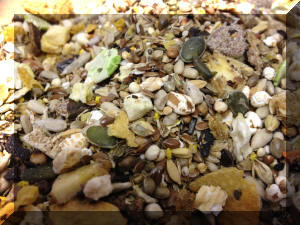
most of my
Mouse mix is from from
www.ratrations.com
Daily: 1 pinch Dr. S Tiny animal essentials.
Weekly: 1 pinch Dr. S calcivet powder.
No. 7 with egg biscuit
Red dari (milo) seed
Meadow seeds
Meadow seeds fine
Linseed
Low sugar cereal mixture
Bulghur wheat
Apple cubes
Hemp seeds
Locust carob pieces
Pumpkin seeds
Sunflower seeds
Banana chips
Plus left over of old mix:
Wagg mouse mix
Porridge oats
Corn flakes
Bran flakes
Alpen
Pudding rice
Mine don't like maize or most of the wagg mouse mix ingredients. Mine also don't
like fresh apple, banana, yoghurt, broccoli or carrot (last two fresh OR
cooked). Unless its dry they won't eat it, but its good to try other mice with
fresh fruit and veg provided its not citrus.
WATER:
A tip on water - firstly ALWAYS make sure that fresh water is freely available -
I prefer to have at least two water bottles just in case one develops a problem.
Whilst you can use bowls I wouldn't suggest it as they quickly become soiled and
unhygenic - if a mouse drops a poo in it before you go to bed then he may have
to drink filthy water all night, and mice can dehydrate very fast.
To ensure that your bottles do not drip, once filled wipe down the outside with
a cloth to dry them, then turn nozzle-down over the sink and gently squeeze a
little water out, then release and allow the air bubbles to rise to the top.
This creates an airlock which helps prevent dribbles. Carry the bottle to
the cage still nozzle-down so that the air bubble doesn't reach the nozzle, and
secure to the cage. I have never had any problems with leaks with this
method.
Wash bottles thoroughly on a regular basis, spray cage disinfectant through the
nozzle and rinse repeatedly form both ends, shake, and repeat several times to
ensure no taint remains. Wash everything in extremely hot soapy water and rinse
thoroughly before air drying.
In order to reduce urine smell a handy tip is to add a couple of drops of
(ALCOHOL FREE) vanilla essence to the water, as this neutralises the smell in
the urine: handy if you have bucks or a lot of mice. At first make sure that you
offer two bottles - one of plain water and one with vanilla to make sure that
the mice don't mind the new taste and don't go thirsty. You should find
though that they actually prefer the vanilla water to the plain.
Suggestions for treats for your mice:
- dry bread or flatbread (stale is ok, mouldy is not)
- malt paste
- mealworms
- pumpkin seeds
- sunflower seeds
- hemp seeds
- banana chips
- coconut curls
- doggy "chocolate" drops
- yoghurt drops
- dog biscuits
- a little bit of digestive or rich tea biscuit
Exceptionally rare treats for special occasions (about once a month max) include:
- Sugar puff
- piece of cheese no bigger than their paw
- a lick of ice cream off my spoon.
An excellent source of essential minerals is a chicken bone. For mice they can be cooked, but it is best to boil them for about 12 hours in the slow cooker (which I do when making stock from the carcass of a roast chicken). Strain the stock, discard the tiny bones (ribs, neck bones etc) and set the bigger leg bones etc on a piece of paper towel to dry and cool, then give one to the mice - they will LOVE it, and probably drag it all over their cage to hide it.
You can even wrap the spare bones up and pop them in the freezer for later treats. When you want to give them a fresh bone just take one from the freezer.