
Contents: (click on text to go straight to that section)
- Overview: curbs, snaffles & bitless bridles.
- Legality
of bits for competitions
- Bit care
- Changing bits
- Action of bits
- Curbs in detail
- Snaffles in detail
- Bitless bridles in detail
- Myler bits in detail
- Unknown bits - deducing the action of strange
bits
- Notes on selecting a bit
- Other bits of interest
- Bridles and bits
- About the author.
Bits can be made of a variety of materials, the most common is stainless steel, but they can also be made of iron, copper, nylon, vulcanite, rubber, and, in centuries past, leather, bone or wood. Nickel was also used until recently, but it wears thin and can break easily, as well as quickly developing sharp edges, and therefore is not safe for use in bit manufacture. The nylon bits (known as "nathe" bits) can also come impregnated with an apple or mint taste, known as "happymouth" bits.
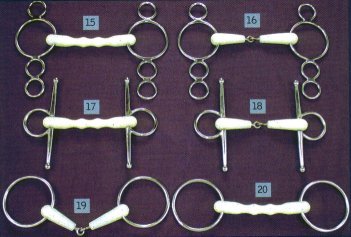
Above: a selection of nathe or "happymouth" bits, although some horses develop dry mouths with these.
(15: straight bar Dutch gag, 16: jointed Dutch gag, 17: straight bar cheeked snaffle, 18: jointed cheeked snaffle, 19: loose ring jointed snaffle, and 20: loose ring straight bar snaffle)
Bits fall into 3 main categories:
1 – curbs
2 – snaffles
3 – bitless bridles
The bits will be pictured and more accurately described later, but as an overview:
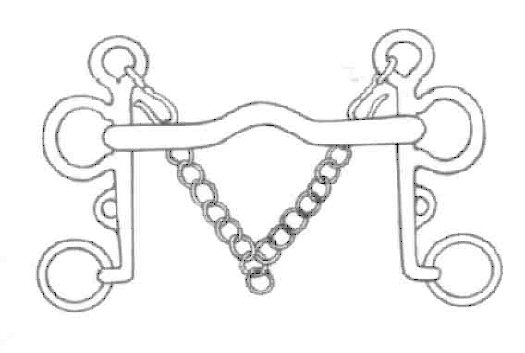
Common bits in the 1st category (curbs) include the pelham, kimblewick, liverpool, universal reversible, gags and the weymouth bit of the double bridle. Curbs generally work by applying leverage to the head to encourage submission.
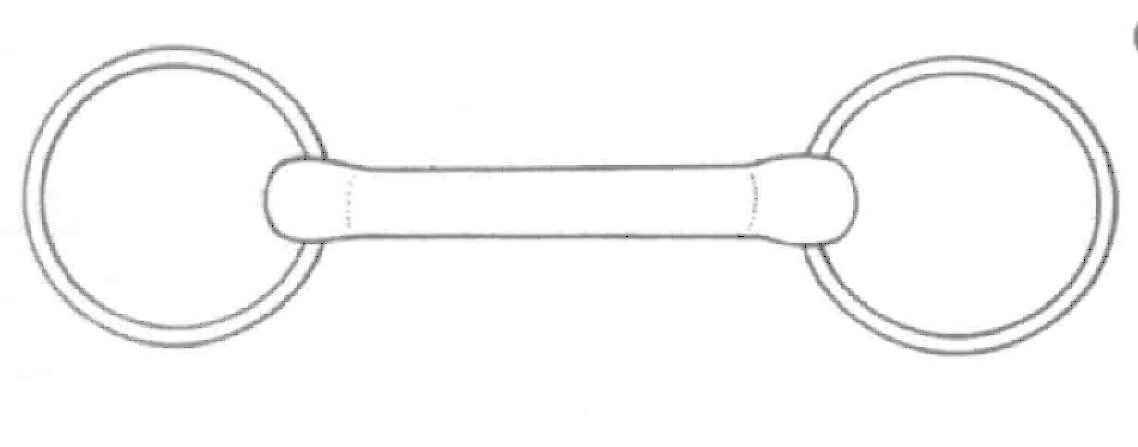
Common bits in the 2nd category (snaffles) include the eggbut, fulmer, waterford, french link, Dr. Bristol, straight bar, cherry roller, twisted, magenis, y-mouth, wilson/scorrier, and the bridoon bit of the double bridle. Most are available in fixed ring or loose ring (ie the bit ring slides freely through the holes of the mouthpiece). Snaffles generally work by direct action mostly within and around the mouth and it’s structures, with little or no leverage on the rest of the head.
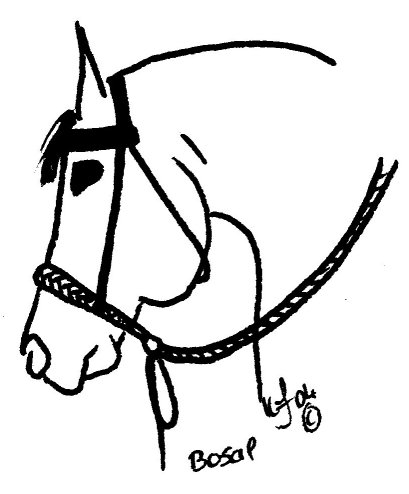
There are various different forms of bitless bridle available, the most common being the English hackamore, the German or mechanical hackamore, and the Spanish Bosal. To a certain degree, the Kineton noseband also fits into this category, as it transfers some of the pressure from the bit to the nose. Less common and little-used bitless bridles include the scawbrig, a very imprecise-actioned bridle which applies pressure to the nose and chin groove, and a new american-devised bridle which applies poll pressure as well as nose pressure to encourage the head downwards. Bitless bridles generally work on the basis of nose pressure to encourage submission, sometimes combined with leverage action to bring pressure on the poll and chin groove, and to a certain degree the sides of the face, however the mouth and it’s internal structures are not involved.
For affiliated competitions you will be limited by the governing body as to which bits you may and may not use in the competition, or phases of it. For example in eventing you may use many varieties of snaffle for the dressage phase, but not gags or other stronger bits, whereas many of these are allowed for the cross country or showjumping phase.
Because of new bits constantly coming onto the market the rules regarding their acceptance and use by the individual governing bodies change from year to year, so it is important to check the rule book at the beginning of the year in which you intend to compete (some rules cover unaffiliated competitions as well) so you will be aware if your bit may be used to compete in, or if you will need to prepare to compete your horse in a different, accepted one. Stewards will perform spot checks at most competitions, and may disqualify you if they find you using an illegal bit, causing you to forfeit your entry fee in the process!
After use, bits should ALWAYS be rinsed in clean water before being stored to help prevent build up of bacteria and filth. Before using the bit for another horse the bit should be disinfected by washing in hot water and washing up liquid then rinsed and dried. Even better rinse with boiling water straight from the kettle, but remember to allow the bit to cool before putting it in the horse’s mouth! On a freezing cold day it is a matter of courtesy to your horse to pre-warm the cold bit a little before asking him to take it in his mouth, particularly if he is a young horse, as an icy cold piece of steel in his mouth could be quite a shock! Either run warm water over the bit before you leave the tackroom, or my favoured method is to tuck the bit under your arm as you carry the tack to the stable so that your body heat warms up the metal on the way.
BEFORE you consider changing your horse’s bit, it is vitally important that you check all other reasons for your horse’s way of going to eliminate any problems, as most horses should (in theory) be perfectly capable of performing in the mildest bit available if schooled and ridden correctly from the beginning in well-fitting tack.
If you come across a schooling problem therefore (such as hollowing, resisting the contact or leg, one-sidedness, rushing, napping, head tossing, being strong or other such evasions) it is vital to first:
1. Have your vet or equine dentist check your horse’s teeth, as sharp edges can cause resistance due to pain.
2. Have his back checked and if necessary manipulated by your vet or equine chiropractor/physiotherapist, as back pain can cause not only resistance through pain but lasting physical damage to the muscles.
3. Have his saddle checked by a fully qualified saddler, as badly fitting saddles can cause back problems outlined in point 2. Ideally have your horse’s back and saddle checked at the same time so that the chiropractor and saddler can confer on any problems found and work together to resolve them. Also check the fit of his bridle, or have a professional check for you.
4. Have a fully qualified BHS or ABRS instructor watch you ride and assess if you yourself may be causing any resistance through your riding style or mixed signals (often unconsciously) – even top level Olympic riders have trainers to keep them on track, no one is perfect! A good instructor should be able to help you and your horse resolve your problem without moving to a harsher bit, but if you DO need a stronger bit, an instructor is also vital to teach you how to ride in it correctly.
Different bits employ pressure on different parts of the horse's head in order to achieve the desired result. The places where bits can act are:
1. the tongue
2. the bars
3. the lips
4. the roof of the mouth
5. the chin groove
6. the nose
7. the poll
8. the side of the face
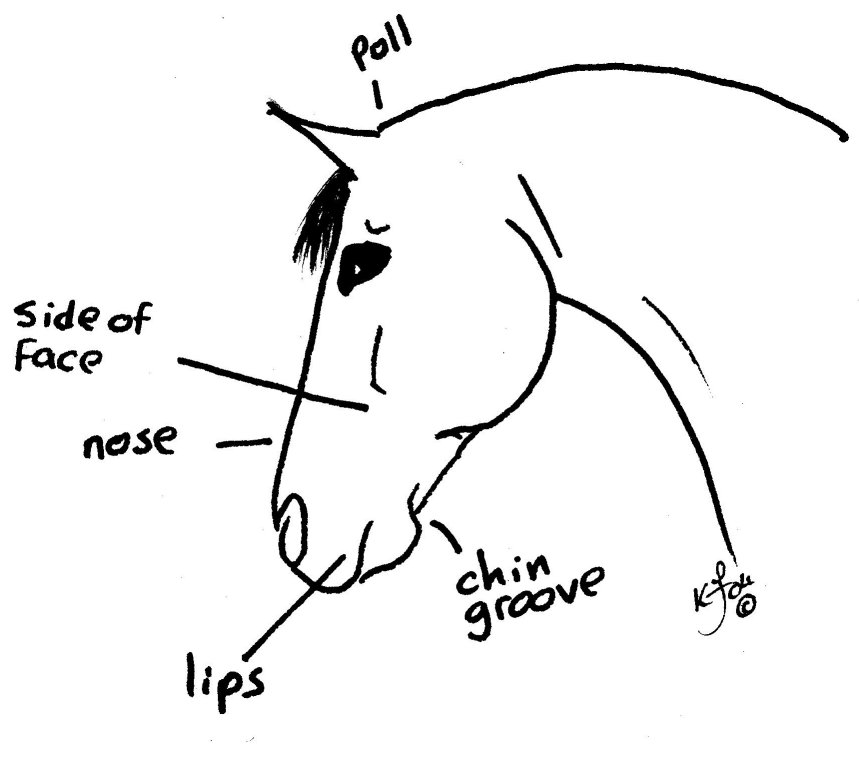

In general, thinner bits are harsher by applying pressure over a reduced area, while fatter bits are milder by applying pressure over a wider area, however some small-mouthed or thick-tongued horses are uncomfortable with a thick bit, as they do not have enough room in their mouth for it. German “hollowmouth” snaffles are very thick, but rather than being heavy, the core is hollow to make it a kind and lightweight bit.
Loose ring bits are supposed to give more "play" in the mouth, encouraging salivation, which lubricates the mouth, encourages relaxation of the jaw muscles and makes the horse “softer”, whereas fixed ring bits are more precise in action than the loose rings, and less likely to pinch the lips of more sensitive horses.
Copper and steel/iron mixtures (sweet'n'sour bits) encourage salivation by varying "tastes" of the metal, as in the cherry roller, which also provides play in the rings. Breaking bits have smooth "keys" to encourage play, which is fine when introducing a youngster to a bit, but not favourable for riding in, as it can distract the horse from the job in hand. Nylon and rubber/vulcanite bits can be too dry for some horses, causing sore mouths from rubbing. Vulcanite is hardened rubber. Augrian KK bits have a gold-coated link which provides a warm, “sweeter” tasting link which also encourages salivation and relaxation.
The curb group acts by applying pressure to the poll and chin groove as well as points within the mouth, to lower the horse's head and tuck the nose in by leverage. Curb bits if used by heavy-handed or novice riders can cause extreme pain to a horse by "squeezing" the head. Also a hard yank on a curb bit with a curb chain attached has been known to break the horse's mandible (jaw bone).
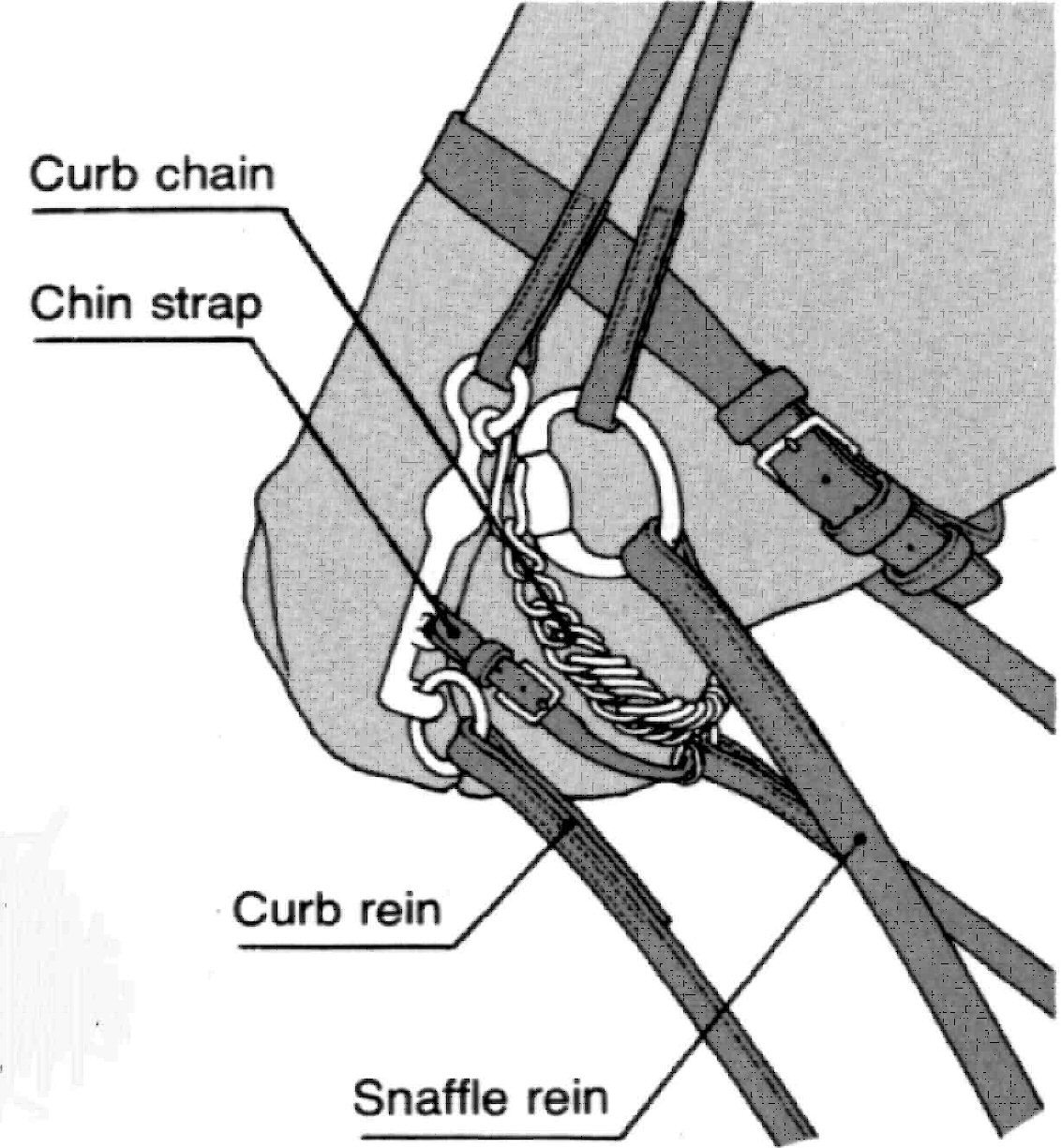
Curb bits (except for gags) are used with a curb chain in order to prevent the bit from moving beyond a 45degree angle , which would put an unacceptable amount of pressure on the poll, by acting as a stop using the chin groove. This is why correct fitting and measurement of the curb chain is vital when fitting a curb bit. Many curbs achieve the leverage action on the poll because of the length of the “shank”, i.e. the distance from the bit ring to the rein ring – the longer the shank the move leverage the riders hands can use on the horse’s head. Western bits (not covered here) tend to have excessively long shanks, up to 7 or 8 inches, but thankfully these harsher bits are rarely seen in the UK.
Many straight bar curb bits may have a slightly raised centre to the mouthpiece (as in the pelham shown below left) to offer some tongue relief. Others may be gently curved along the entire length of the mouthpiece (called a “mullen” mouth) to the same effect. The rise in the centre of the bit is incorrectly referred to by some as a “port” but true ported mouthpieces are much higher than this, and are not often used any more. More on ported mouthpieces in the “Myler bits” section at the end).
The pelham can be used with two reins or with "roundings" and one rein, but then the precise action is lost. Two reins gives you the option of snaffle or curb according to how your horse is going, the roundings and one rein makes the action 50/50 snaffle and curb.
Left:
Pelham, Right: Pelham with roundings
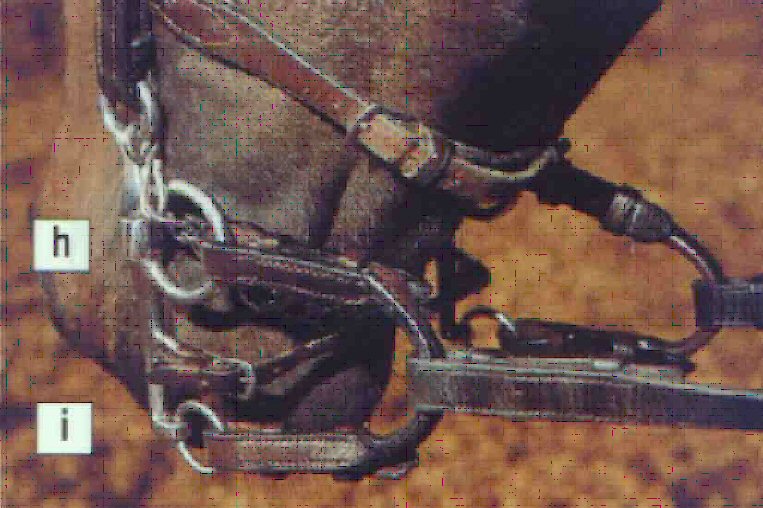
The Rugby pelham is a bit mainly used for showing young horses where two reins will be used in future classes, but the horse has not yet been introduced to the double bridle. It can also be used for small mouthed horses who are uncomfortable with a double bridle. It is basically a pelham, but with the snaffle ring on a short link, to give the illusion of a bridoon coming out from the mouth next to the weymouth. A slip head (extra headpiece) is normally fastened to the snaffle links, to complete the illusion and make it look like the horse is wearing a double bridle.
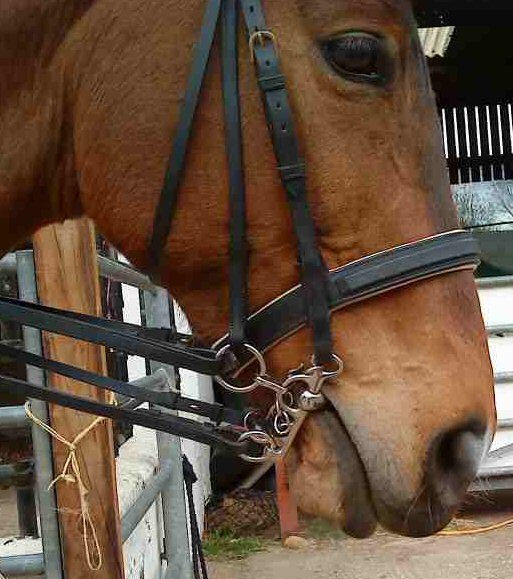 Rugby Pelhams.
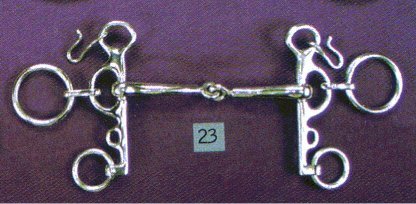
The kimblewick can be plain or slotted – the slotted is more versatile. The plain version is in fact no more severe than a straight bar snaffle, and can often be used as a placebo for a rider who thinks they need a stronger bit. A slotted version provides two (high and low) options of curb action, but very mild all the same. It is also known as a children's pelham for this reason. It is like a mild form of pelham in action.
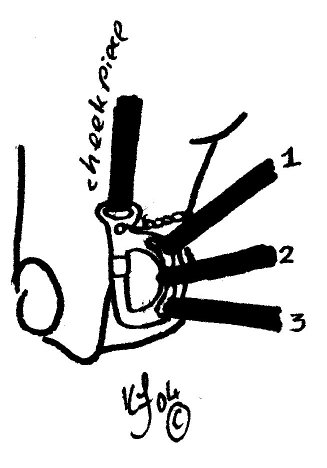
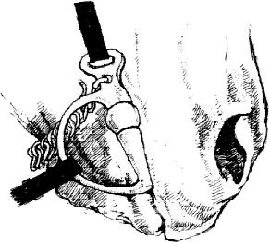
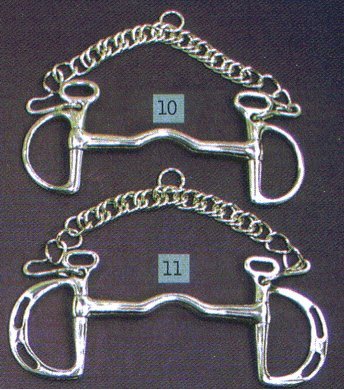
Above left: slotted kimblewick showing the 3 possible rein positions.
1: top slot.
2: plain cheek (as used on the non-slotted kimblewick shown far right).
3: bottom slot.)
Above centre: plain kimblewick
Above right: (top) plain kimblewick and (bottom) slotted kimblewick, showing typical mouthpieces.
The Liverpool bit is a driving bit, and has various settings according to the horse – plain cheek, where it acts like a straight bar snaffle, rough cheek which provides a small curb action, hole one where it gives a stronger curb action, and hole two where is gives severe curb action. Another common driving bit is the Buxton, which features a bar across the bottom of the shanks of the bit which prevents the reins from becoming entangled in the shanks should the horse toss his head.
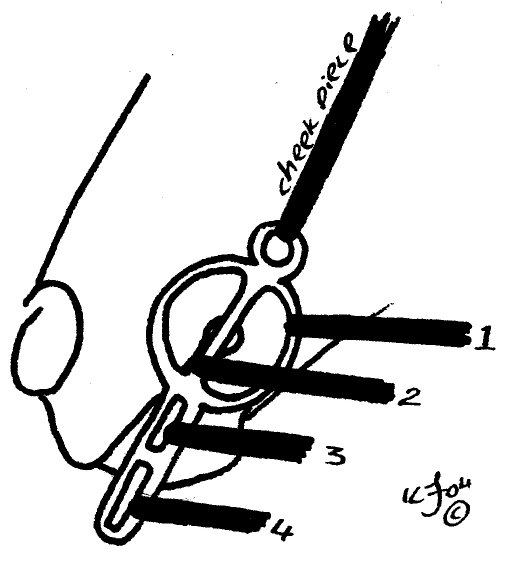
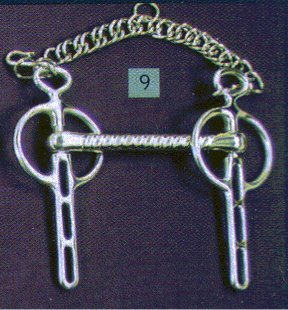
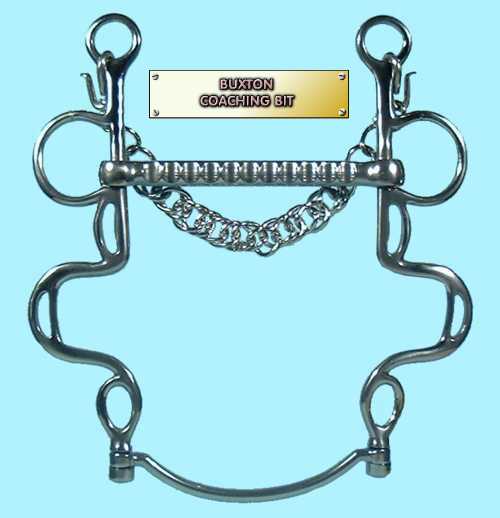
Above left: Liverpool bit showing the 4 possible rein positions.
1: plain cheek (snaffle action)
2: rough cheek (very mild curb action)
3: slot one (curb action)
4: slot two (strong curb action)
Above centre: a 3-slotted Liverpool bit where the top slot takes the “rough cheek” rein position)
Above right: Buxton coaching bit.
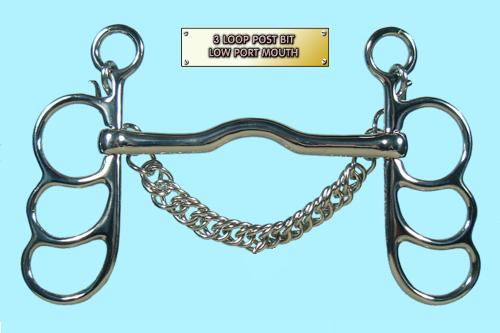
Below: Another bit used for driving, commonly known as a "butterfly" bit:
The Universal Army or reversible elbow bit is the bit of choice for mounted police and army forces worldwide, and can be adapted to suit almost any horse's needs in one bit. One side has raised ridges to act like a twisted bit (twists are harsher in the mouth than smooth metal, for stronger horses), whereas the other is smooth. It is quite like a liverpool bit in the choices you have for rein settings, but always is used with two reins, one as a snaffle rein, and the other as a curb, on any one of 3 holes, plus the twisted or smooth option.
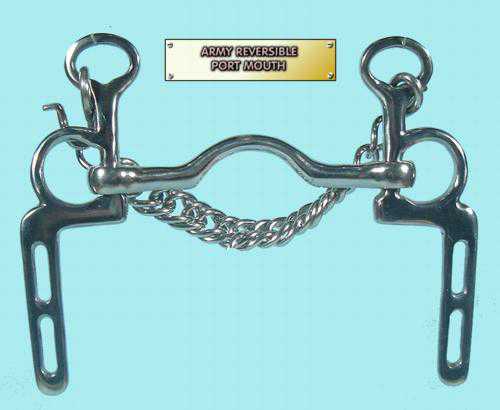
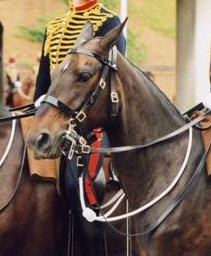
Above left: Police horse wearing a Universal Army reversible bit
Above centre: bit showing smooth side
Above right: Army horse wearing the same bit.
It is interesting to note the difference between police/military bridles and regular civilian bridles - they combine a headcollar into the bridle design to facilitate tying the horse up when the officer is required to attend to something on foot. As you can see in the photo on the right, the horses often wear a leadrope or chain around their necks attached to the headcollar part of the bridle ready for tying up. Chains are sometimes used to prevent people from cutting the rope and loosing the horses.
Gags come in various forms, and are the only curb bits with no curb chain option. The English gag is like a snaffle, and is usually ridden with two reins – one a normal snaffle rein, and the other runs through holes in the top and bottom of the bit ring, giving a curb action, and also a tightening action on the poll. Gags are often used in games of Polo.
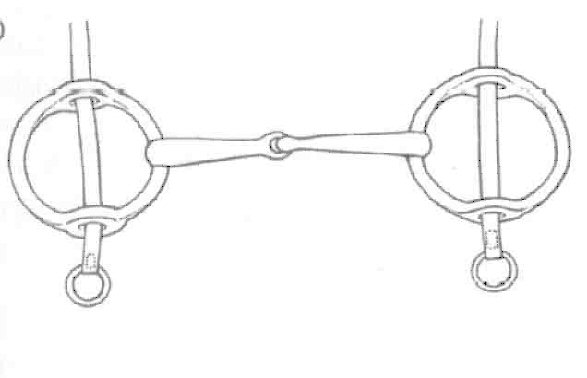
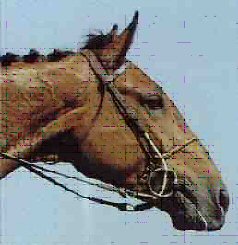
Above: English gag, and shown being used with only one rein - not ideal.
Below: variations on the same principle, (left) the Duncan gag, and (right) the Cecil gag, which adds a sliding action.
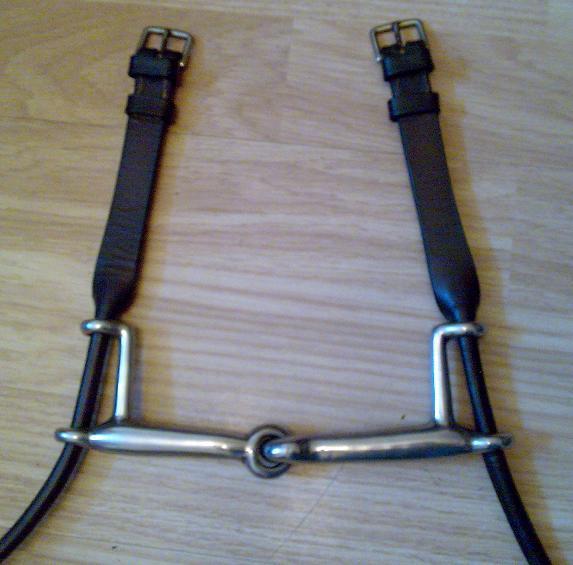
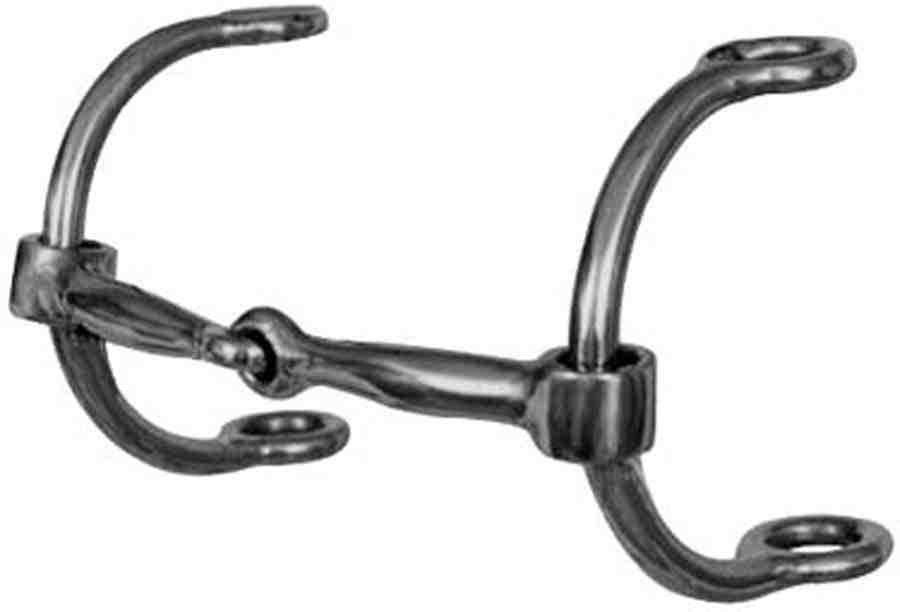
The American gag has a long curved arm that can slide on the bit, also giving poll pressure. It is more severe than the English version.
The Dutch gag or "globe bit" is like a snaffle, but with one ring above the bit ring, and one or two below, giving two options of curb severity, also applying poll pressure.
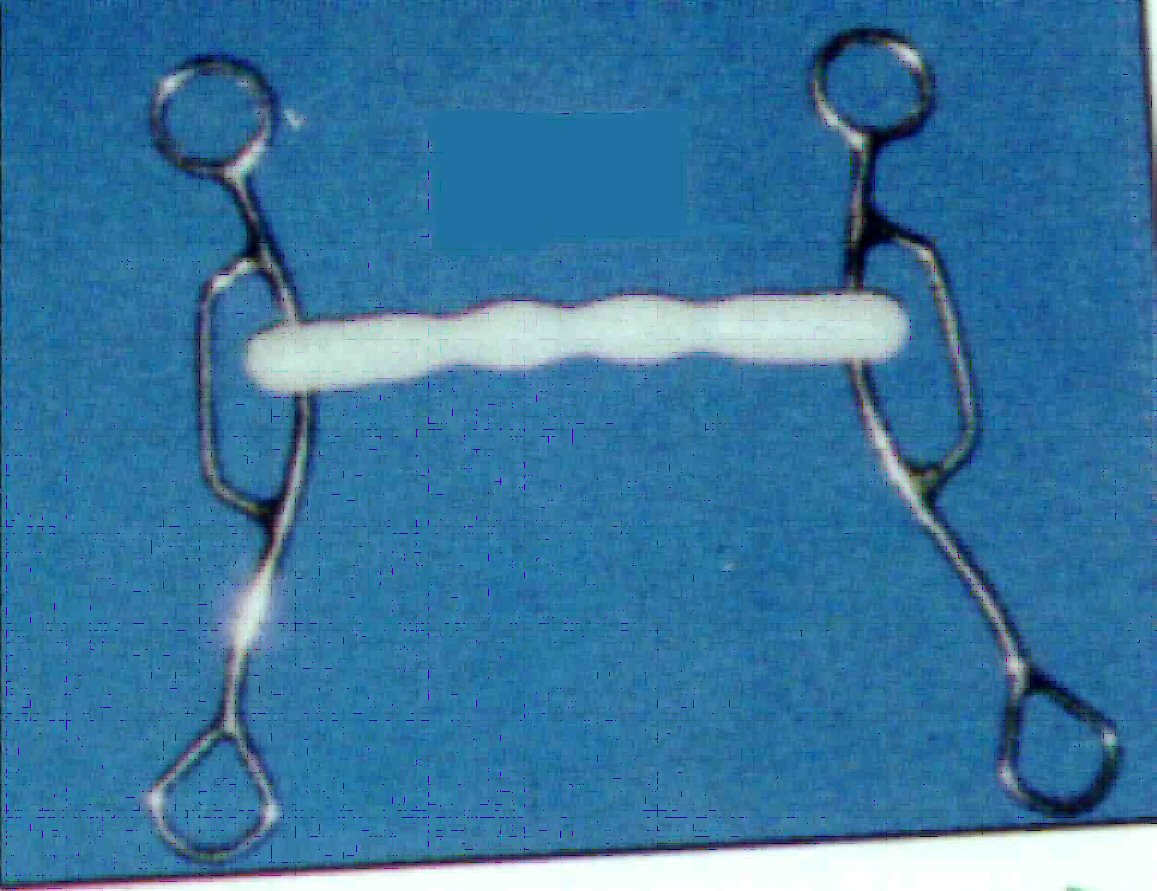
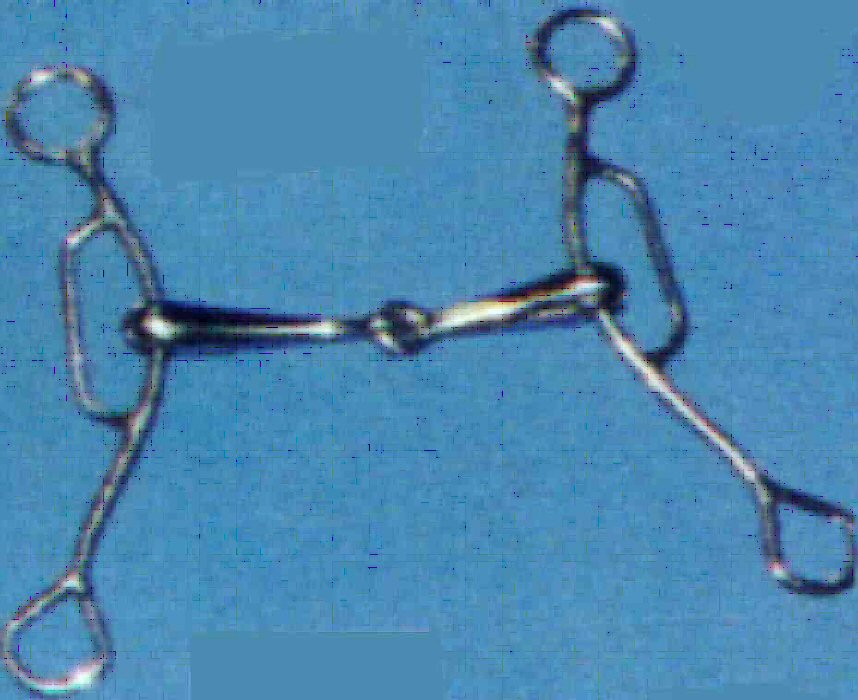
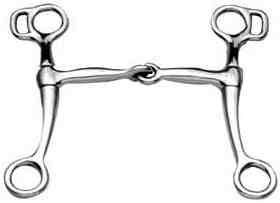
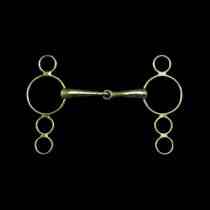
Above: left: nathe "happymouth" straight bar American gag
centre left: jointed American gag
centre right: "Tom Thumb" bit - another jointed American gag type
right: Dutch gag or "globe" bit.
The Double bridle:
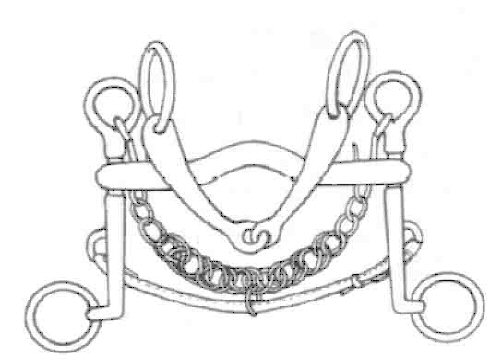
The first of the two bits used in the double bridle, the weymouth, is similar to a pelham, but only has the curb bit ring, not the snaffle, as the snaffle (bridoon) is separate in the double bridle.
Both the weymouth and bridoon can come in either fixed or loose ring options. The weymouth is made “loose ring” by having the cheekpieces sliding a certain degree up and downwards, however this may pinch unless fitted carefully.
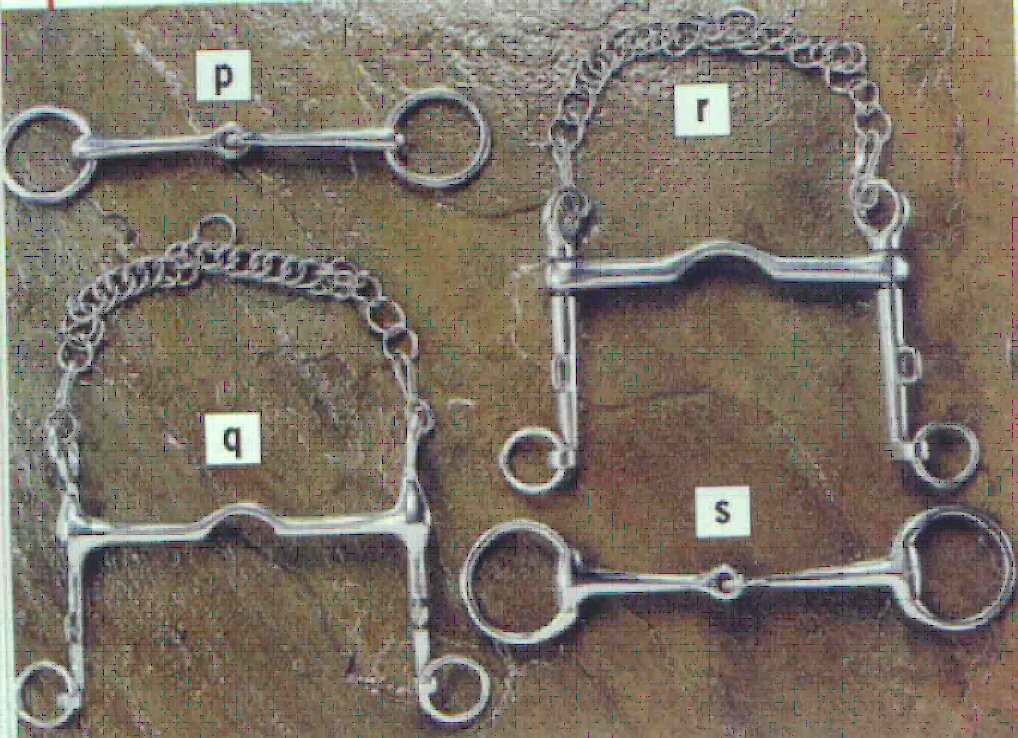
Above left: (p) loose ring bridoon (q) fixed mouth weymouth (r) sliding mouth weymouth (s) fixed ring or eggbut bridoon.
Above centre: close-up of the bits fitted correctly in the horse’s mouth with curb chain to prevent the weymouth applying too much poll pressure. The chin strap (also known as the lip strap) is a thin rolled leather strap which runs through the fly link (loose link in the centre of the curb chain) in order to prevent it from being lost should it become unhooked from the sides of the mouthpiece during work)
Above right: the Weymouth and Bridoon together.
The snaffle group are generally considered to be the mildest group of bits, but this is not correct – some of the most vicious bits fall into the snaffle category, even the eggbut snaffle, one of the most widely used bits in the world can be quite severe in the wrong hands. Snaffles do not generally put much pressure on the poll or chin groove, but on the tongue, bars, lips and roof of the mouth. (Although used in conjunction with a kineton noseband any bit will apply pressure to the nose)
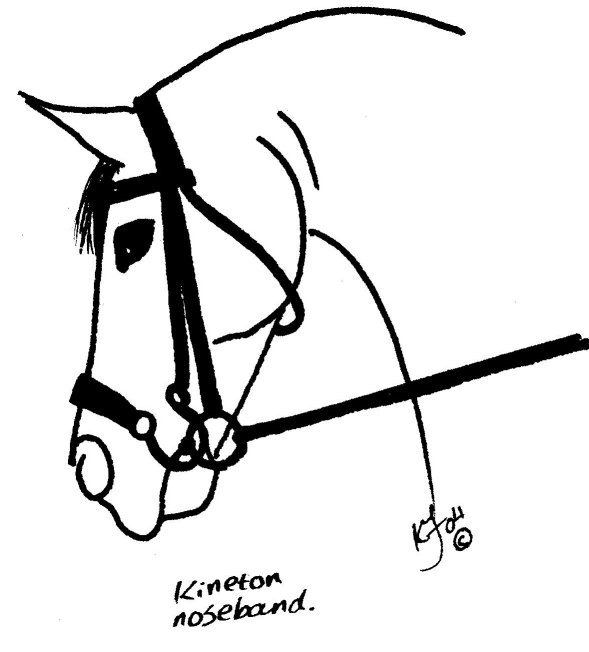
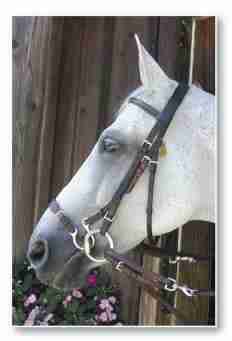
Above: kineton noseband. When pressure is applied to the bit, it makes contact with the metal hoops joining the noseband to the headpiece, transferring bit pressure to the nose for extra stopping power.)
Straight bar snaffles are very basic and straightforward in their use, and quite mild, as they do not apply pressure to the roof of the mouth or the bars – just the lips and tongue, but are not highly accurate to ride in. The eggbut snaffle, or any other middle-jointed snaffle can put extreme pressure on the bars, often causing bruising, and also can inflict injury to the roof of the mouth as the joint rises and presses into the palate when pressure is applied to the reins, as the bars are squeezed. This causes raising of the head in response to the pain, which is why a double bridle works with a head lowering and a head raising bit together to achieve the desired balance in skilled hands. The thinner the mouthpiece the more harsh the effect, the thicker the gentler, however as thick bits can be heavy, you can also get "hollowmouth" bits which are hollow and lighterweight but still thick.


Above left: Eggbut (fixed ring) snaffle, and (right) loose ring snaffle
Below: left: plain loose ring straight bar snaffle, and (right) German "hollowmouth" loose ring snaffle - note how it is thicker than the above loose ring.
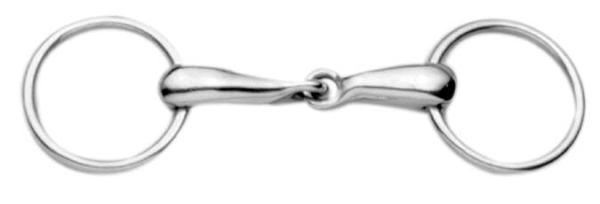
The hanging cheek snaffle helps prevent horses getting their tongue over the bit by holding it raised in the mouth. (An Australian Cheeker bridle can also help with this)

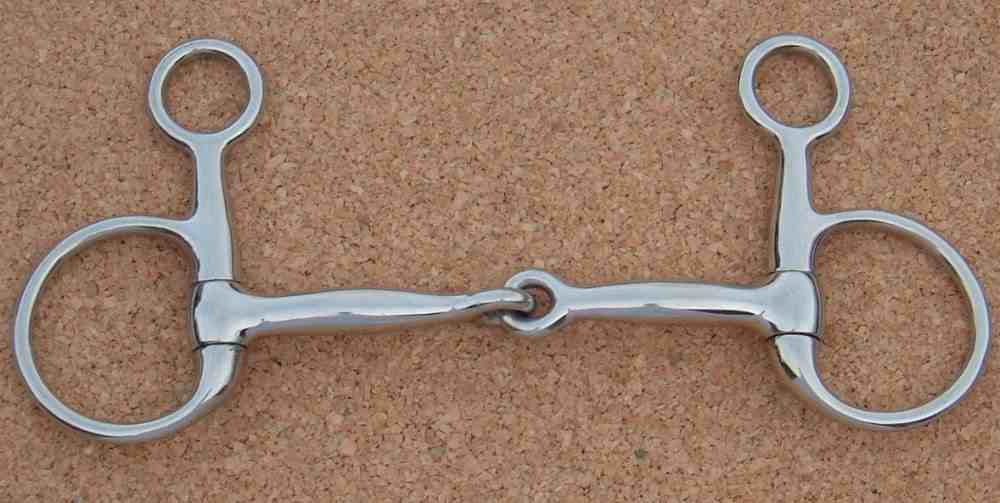
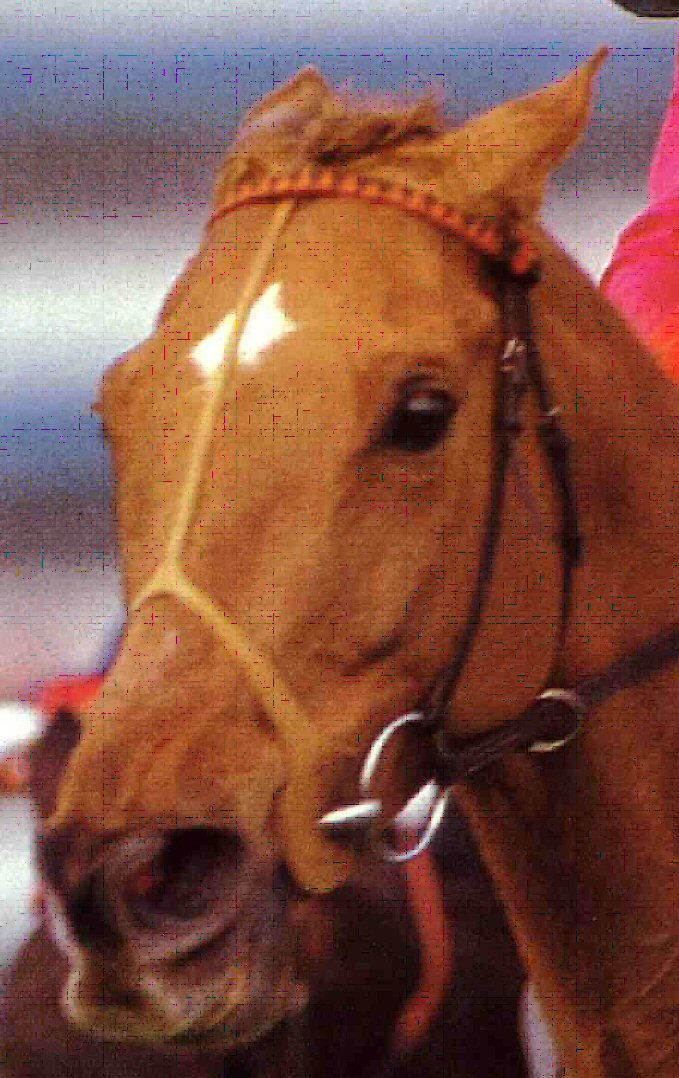
Above left: straight bar hanging cheek snaffle
Above centre: jointed hanging cheek snaffle
Above right: Australian cheeker bridle, attached at the headpiece, it runs between the ears, down the face and splits in two at the nose, going over the bit rings onto the bit, to suspend the bit in the mouth, normally seen on racehorses as here.)
The fulmer and cheeked snaffles are supposed to give a bit more guidance to young or unresponsive horses by applying pressure to the side of the face, and can also prevent the bit from being pulled through the mouth. The fulmer snaffles also help straightness, and when a direct rein is used, pressure is applied to the opposite side of the face, encouraging the horse to move his head. They can be dangerous however, and a horse should never be left tacked up and unattended wearing a fulmer snaffle, as if it is caught on something, it has been known for the cheek piece to rip the horse's face open. In racing D-ring or large ring snaffles are used to prevent the bit being pulled through the mouth, and are a much safer option.
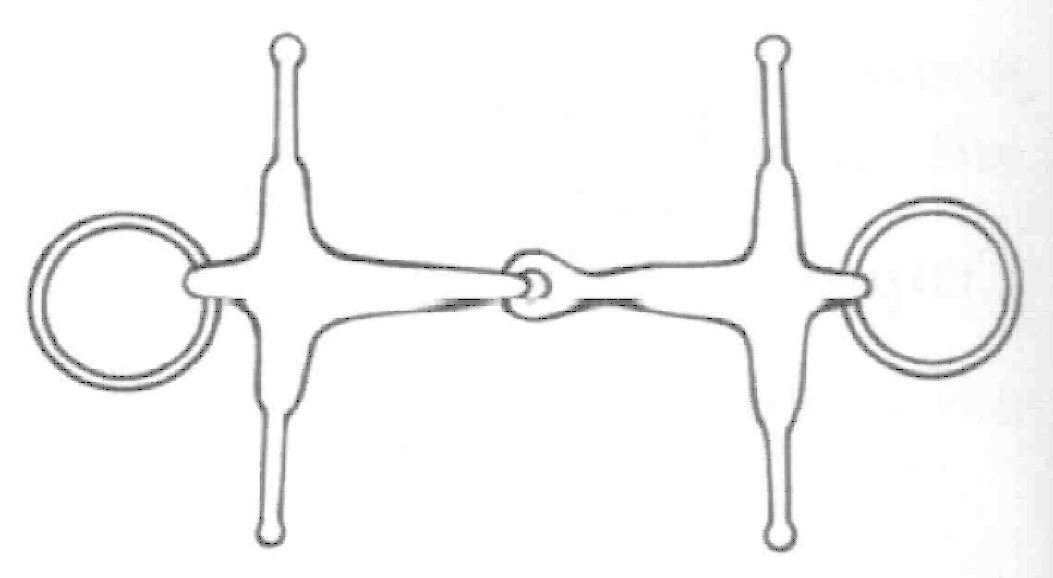
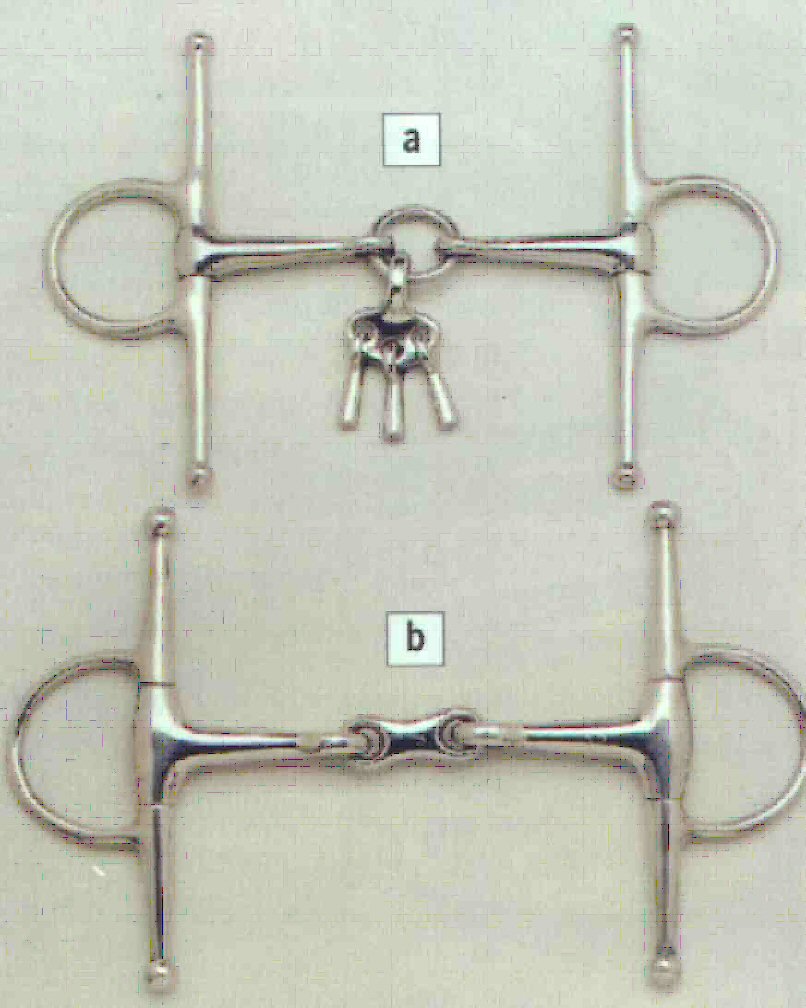
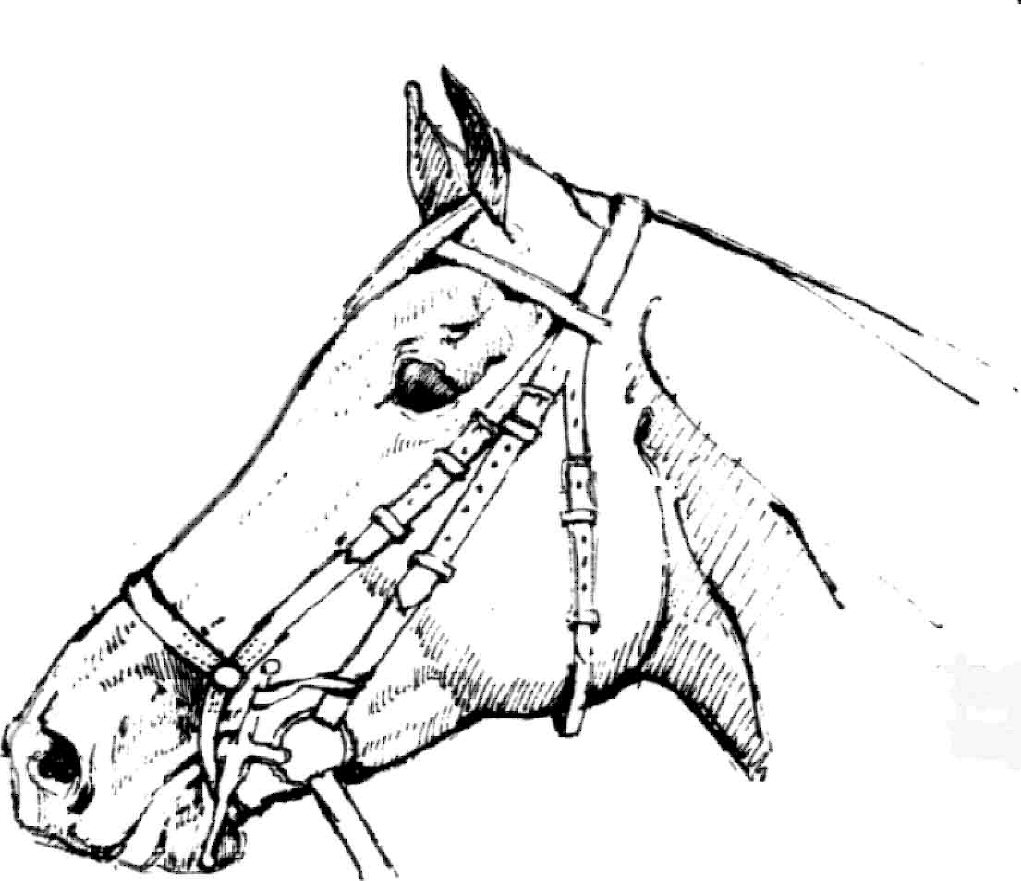
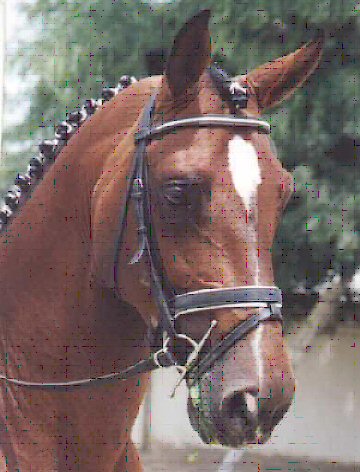
Above left: a fulmer bit (in this case a snaffle) has the cheeks before the ring.
Above centre left: cheeked bits have the cheeks directly attached to the bit rings. in these cases a keyed and linked breaking snaffle (top) and a french link snaffle (bottom)
Above centre right: a fulmer snaffle with a drop noseband, showing keepers attached to the top of the cheeks to hold the bit at an angle in the horse’s mouth.
Above right: a cheeked snaffle does not usually have keepers
Breaking bits are designed for use with young horses to introduce them to carrying a bit in their mouths. They generally have “keys” – loose smooth metal pieces designed to encourage the horse to play with the bit, so relaxing the jaw muscles, encouraging submission to the bit/contact (generally when lungeing with side reins, or long-reining) and encouraging salivation which lubricates the mouth and makes the bit more comfortable to carry. They are not normally used for riding in.
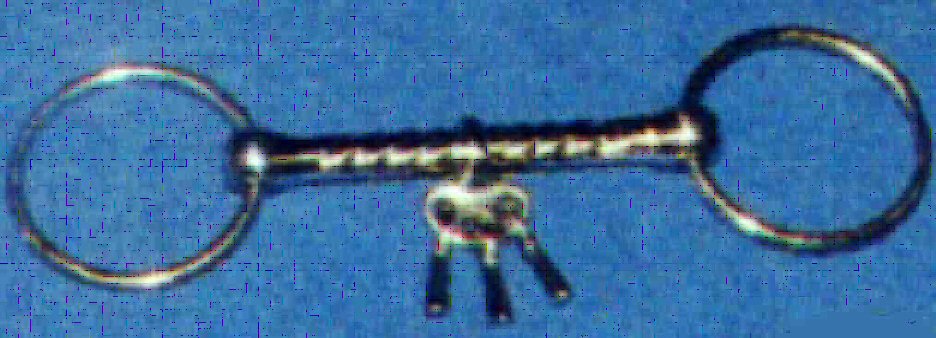
Above: a breaking bit, double sided, one being smooth, and the other (shown) ridged, so there is the option to swap the bit round for different horses.
The magenis snaffle has slots along the middle of each branch, which hold rings that rotate laterally, rather than round the bit itself – this encourages sideways play in the mouth and can be beneficial with showjumping horses who have to turn sharply. (Shown below)

Roller (often “cherry” roller) bits incorporate rings (in the cherry case, copper like those in the magenis shown above) around the arms of the bit also to encourage salivation, particularly with the use of copper as it has a different taste and temperature (it warms quicker than steel in the horse’s body heat).
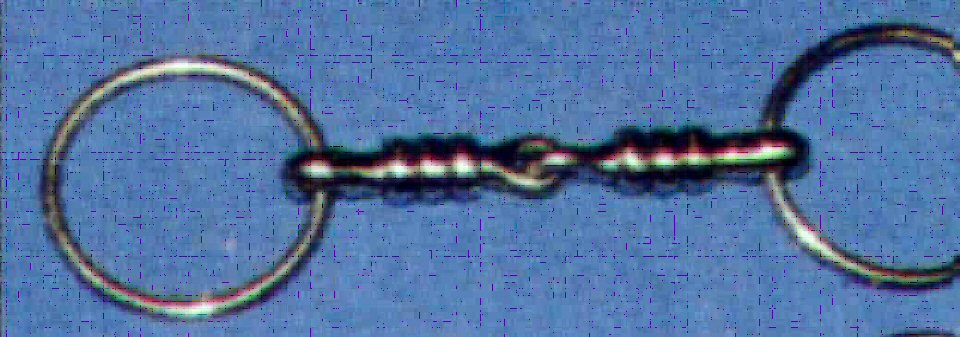
Above left: loose ring roller bit and (right) D ring cherry roller
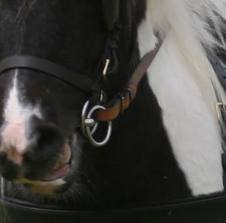
The wilson and scorrier bits are very similar to each other at first glance. They have two sets of bit rings, one pair where they would normally be on a snaffle, and the other around the bit itself, or in the case of the scorrier the inner rings are fixed, sliding through slots in the arms of the bit closer to the mouth. When pressure is applied to the reins, the face is squeezed between the two inner rings – it is quite a harsh bit, often used for driving, and prone to causing pinching or rubbing if incorrectly fitted.

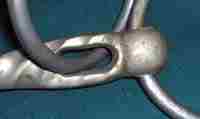
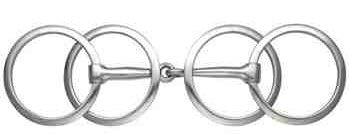
Above left: Scorrier, (centre) detail of ring passing through the arm of the bit, and (right) Wilson snaffle.
Below: Wilson snaffle in use.
The twisted snaffle, and indeed any bit with twists on it, cause a series of sharpish
pressure points and are uncomfortable for the horse. They are quite harsh bits. Twisted wire snaffles are also extremely harsh, and are banned from many competitions.
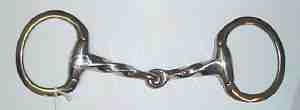
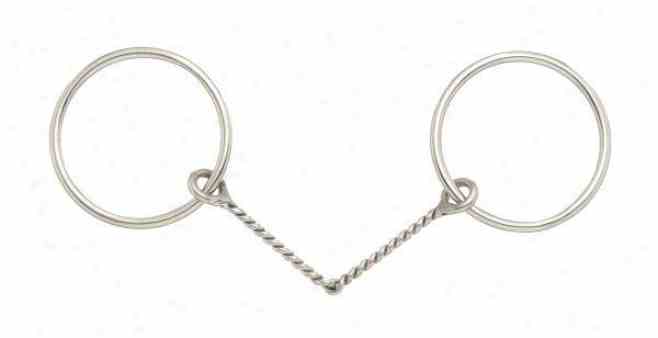
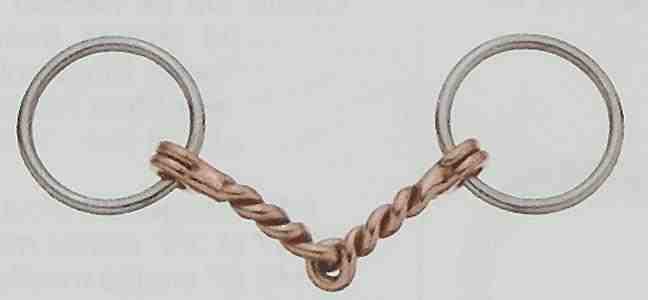
Above left: twisted eggbut snaffle. (centre and right) twisted wire snaffles
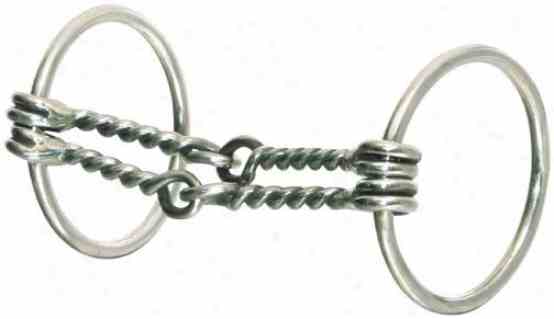
Another harsh snaffle is the y-mouth snaffle, which is in effect two bits in one, with offset joints, they both have a short branch and a long branch, but on one the short is on the left and the other it is on the right, so it creates two pressure points on the roof of the mouth, and two parallel pressure points on the bars. (Shown below)
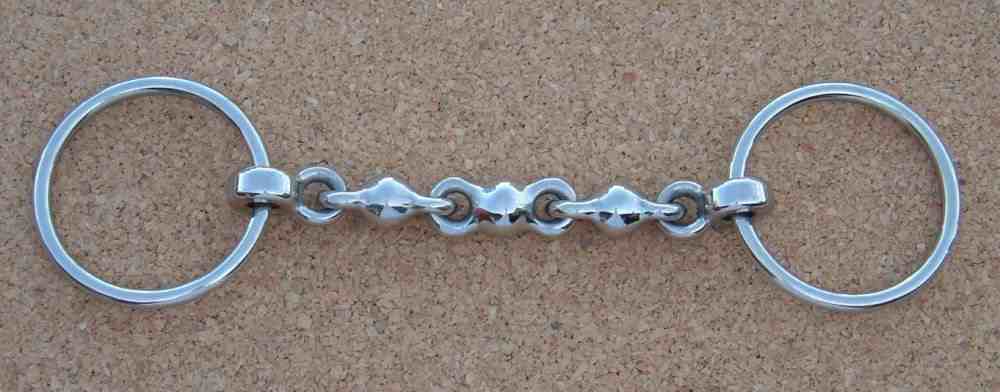
Conversely, the Cornish or Waterford snaffle is quite mild by having a series of SOFT pressure points, so no one part of the mouth has lots of pressure. The Waterford is like a series of fat, smooth bubble shaped joints linked together like a sort of chain. The horse plays with it and salivates, but on the downside it is very imprecise in action, and no good for dressage. (Shown below)
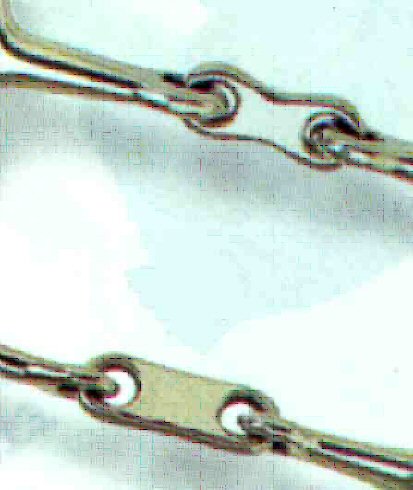
The Dr. Bristol and the French Link snaffles – these two can be confused, and it is very important to know the difference as they are very different in action, one being very soft and the other harsh. The Dr. Bristol is a double jointed bit, with the link in the middle being rectangular in shape and having distinct edges – it is held at an angle against the tongue, and when pressure is applied to the reins it creates a sharp pressure on the tongue, pulling the horse up with some force. It can cause severe bruising to the tongue in the wrong hands.
Conversely, the french link, also a double jointed bit, has the middle link rounded off and soft. It is in a semi-figure of eight shape, smooth edged, and is held flat against the tongue, not at an angle. It works by breaking the "Nutcracker" action, stopping the squeeze on the bars and the pressure on the roof of the mouth. It is an excellent bit for most disciplines, and most horses take to it very well indeed. It provides the perfect balance between "play" and preciseness, encouraging salivation while not distracting the horse. Most horses will never need any other bit if schooled well.
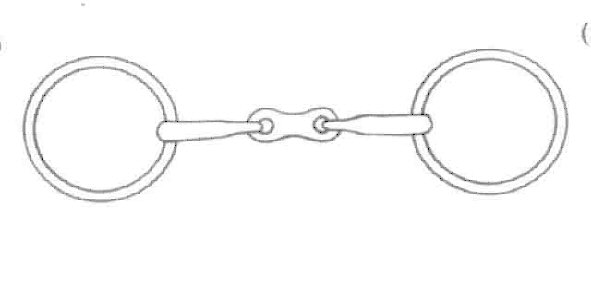
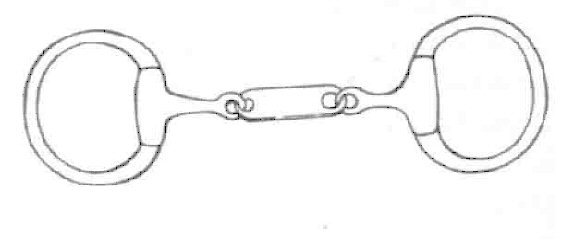
Above left: loose ring French link snaffle, (right) eggbut Dr. Bristol
Below left: close up showing the difference between the French link (top) and the Dr. Bristol (bottom) and (right) loose ring "sweet iron" french link snaffle

John Patterson or JP bits are ergonomically designed to follow the contours of the horse’s mouth to help reduce pressure points which normally cause discomfort to the horse in conventional bits. By curving the arms of the bit, it reduces pressure on the bars, and eliminates the “nutcracker” action of single-jointed snaffles such as the eggbut, preventing the centre link from digging into the roof of the horse’s mouth, causing head raising and resistance.
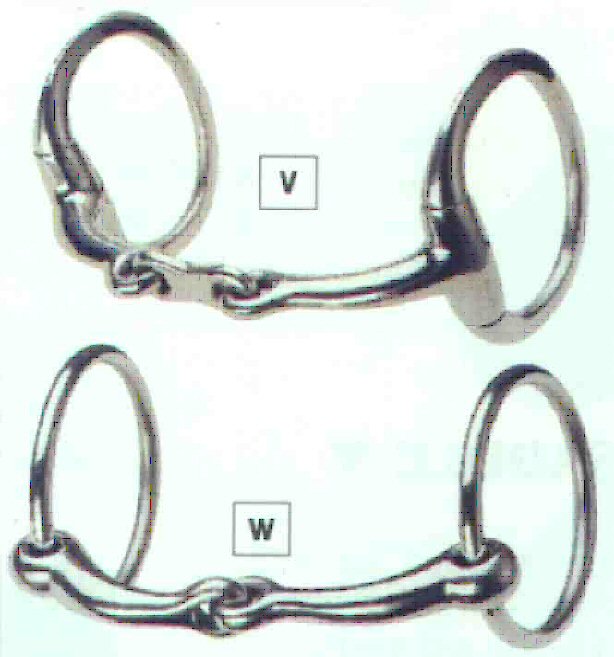
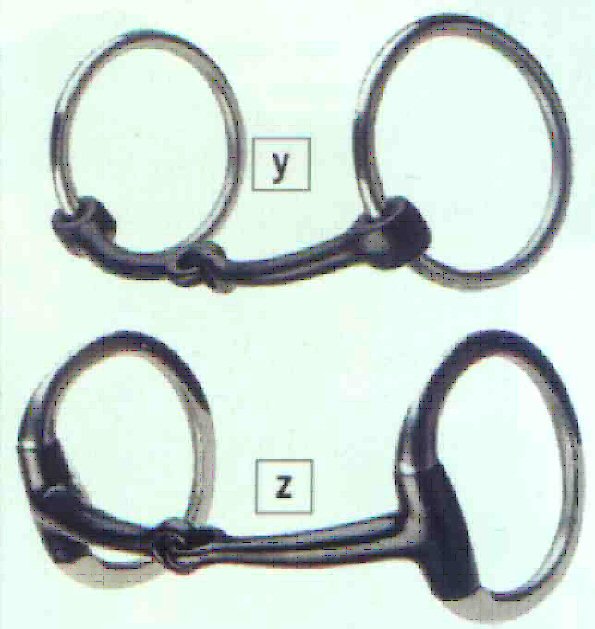
Above, v: JP french link eggbut snaffle, w: JP loose ring snaffle, y: JP loose ring sweet iron snaffle, z: JP eggbut sweet iron snaffle
Below: German Hollowmouth snaffle, lightweight but thick with a wider bearing surface to spread the pressure over a wider area
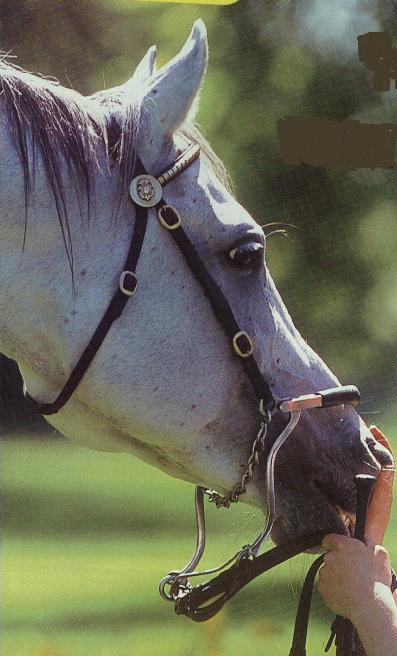
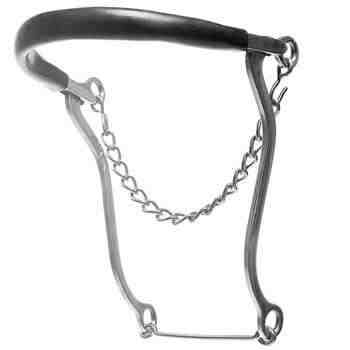
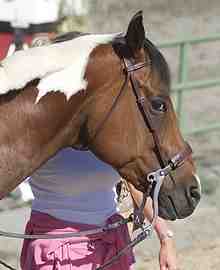
Bitless bridles act by applying pressure to the nose, and in the case of the English hackamore, also some curb action and poll pressure. The German or mechanical hackamore applies pressure to the nose and chin groove when the reins are used, and causes the head to lower – they are most commonly used with young horse whose wolf teeth are giving trouble, or horses with another mouth injury. The chin groove can be injured with improper use though, and the sides of the face can be rubbed sore. It is a very imprecise bridle and not particularly suitable for dressage. The English hackamore also applies pressure to the chin groove, and is stronger than the German variety. The hackamores can be very severe bits, and are capable of pulling a horse up sharply, but are not accurate laterally.
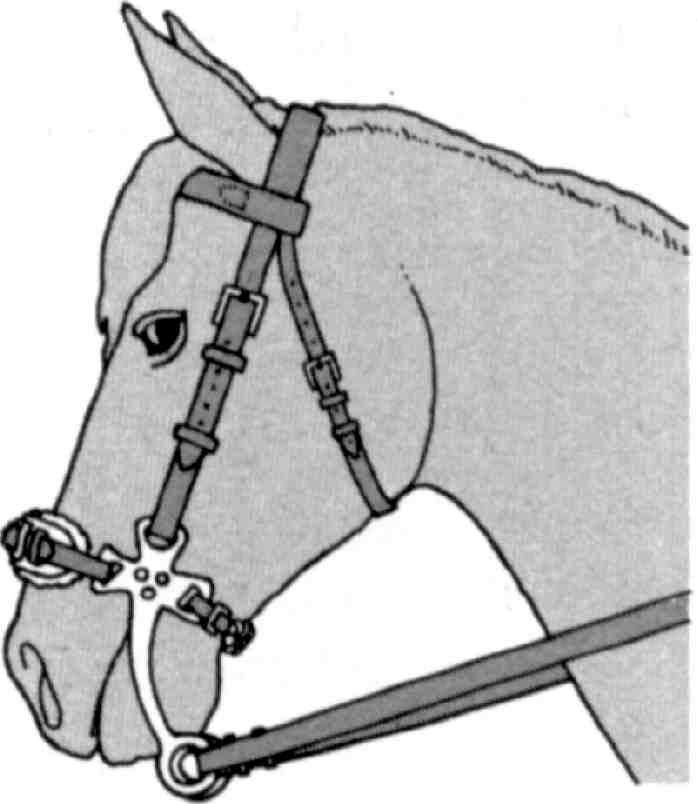
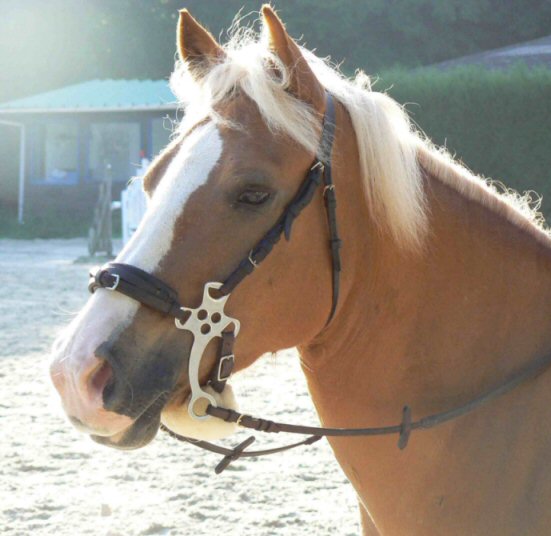
Above: English Hackamore
Below: German or mechanical hackamore
The American Bosal applies pressure to the nose only, and relies on neck reining. It is very mild and imprecise in action, and is only usually used for western trail riding. The bosal is made of braided leather stiffened into a fixed loop and tied to the (usually rope) reins. (shown below)
The scawbrig is a simple bitless bridle which, rather than applying leverage on the poll and nose, acts directly on the nose and chin groove, forcing the jaw shut, with minimal poll effect, it is very imprecise in action and has little practical application except in a few cases.
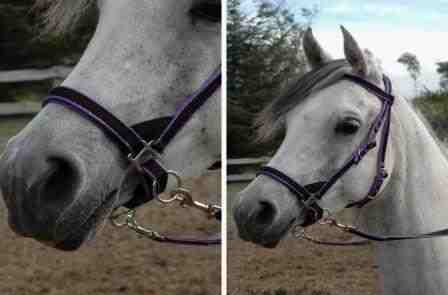
An American designed bitless bridle has come onto the market in recent years which applies more direct poll pressure combined with nose and under-jaw pressure rather than the chin groove, which makes it ideal for horses who resent chin pressure (for example those who have curb-chain sores or similar from previous wear of German or English hackamores). The new bridle acts on the side of the face in a very direct manner by pushing the horses head from the other side as well as your direct rein pull from the desired side, giving a double signal for the horse’s head to turn. This may make it a more precise kind of bitless bridle than those already in use. (see below)
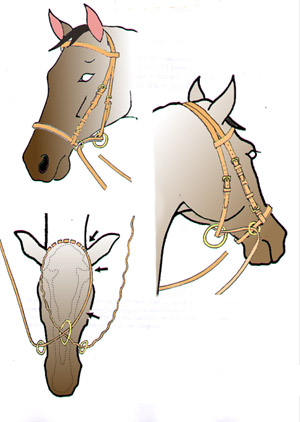
Below: more variations and innovations on bitless bridles. The left picture adds a pulley to apply poll pressure in a similar way to a gag - the more you pull the more the head is squeezed, the centre picture resembles the bitless bridle above, and the right hand picture uses a "wheel" which you can use to vary the "curb" pressure by moving the different elements of the bridle to different sections of the wheel.
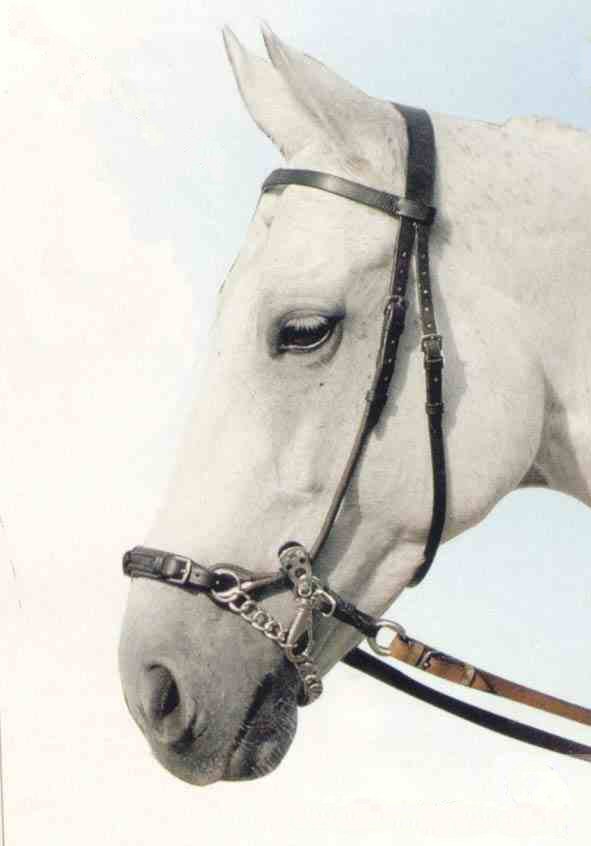
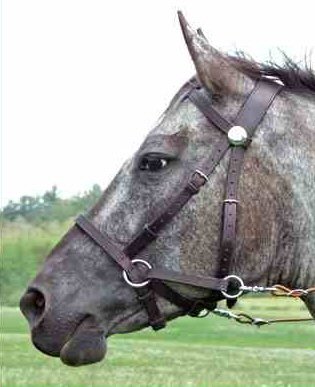
Myler bits are an import to the UK from America, and due to their growing popularity should be mentioned here. As the range is so extensive only a brief overview of the min principles of the Myler bitting system will be offered, as more in-depth books and videos are available to demonstrate the bits and their workings in more detail.
Myler bits have a variety of innovations unique to the range:
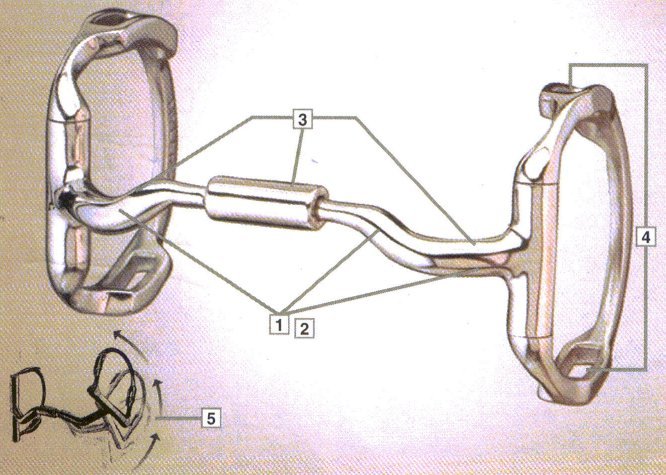
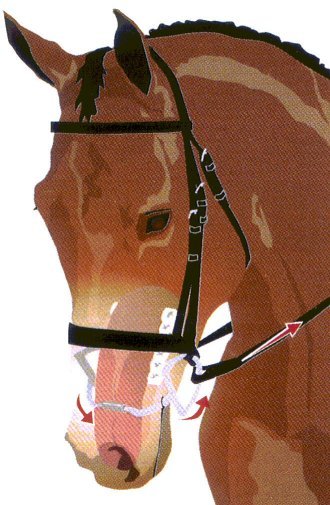
1: Curved mouthpieces offer tongue relief and eliminate nutcracker action
2: Bits are made using a variety of metals usually stainless steel with copper inlays to encourage salivation and relaxation of the jaw
3: The construction of the bits offer instant release of applied pressure as a reward to the horse when he accepts the bit action and aid. The roller enables the bit to roll up and down on the horse’s tongue without pinching. (see image above right)
4: Slots in the bit rings enable precise locating of the cheekpieces and reins, enabling the rein to (a) exert a slight curb action instead of simply sliding round the bit ring, and (b) providing “lift” of the bit, often in conjunction with point #5: the independent side action. The bits can be hinged in the centre of the mouthpiece to allow each side of the bit to move independently of the other, enabling the rider to pick up the horse on one side for more precise communication, helping with balancing, bending and collection etc…
As they were primarily constructed for the American market Myler bits offer some ported mouthpieces which were long ago abandoned in the UK, but are useful for illustration as they may again be gaining in popularity if we follow the American trend:
1: This is one of their milder mouthpieces popular in the UK, a simple roller-barrelled bit with a slightly curved mouthpiece for tongue relief. It is available with independent side action with a selection of bit rings from eggbut, cheeked, fulmer, D-ring etc…
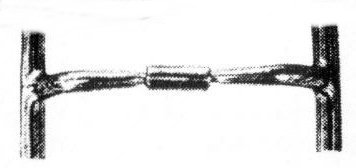
2: A low-ported rollered barrel, which would not put much pressure on the roof of the mouth.
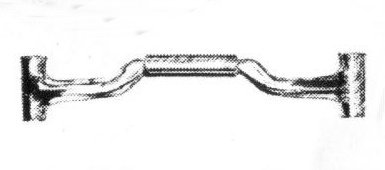
3: A medium-ported bit which would apply pressure to the roof of the mouth, bits such as these have not been widely used in the UK for hundreds of years since the great renaissance period of classical dressage.
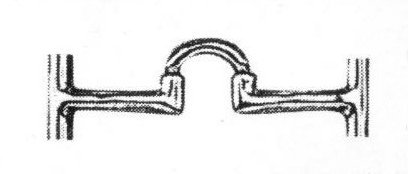
4: A high-ported bit which would apply considerable pressure to the roof of the mouth.
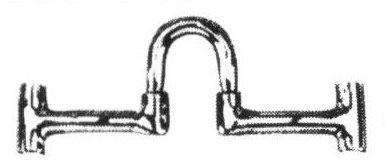
5: A “Cathedral port” mouthpiece, with a more severe action than the bits above, and would also help prevent the horse from getting his tongue over the bit. This is a highly specialised bit and not one I would recommend using without expert tuition and in extreme circumstances when schooling has failed to correct the problem.
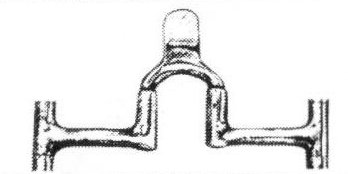
6: A lower ported Myler with a mullen mouthpiece, independent side action and a roller to minimise the more negative actions of the port.
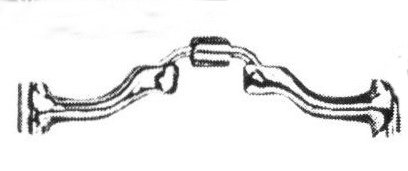
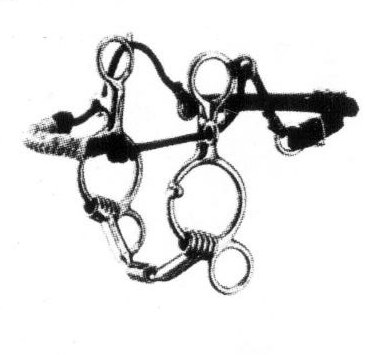
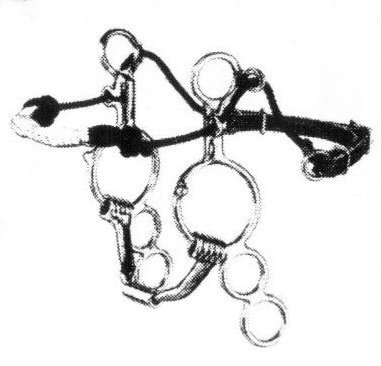
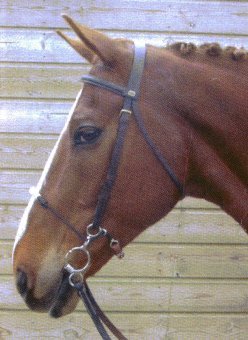
Above right: showing the 2-ring combination on the horse, you can begin to understand it’s application. When rein pressure is applied, the bit ring slides towards the rider, the small knob on the bit ring stops against the sides of the mouthpiece, and at this point the curb action begins on the poll, whilst at the same time the rawhide nose piece AND the leather chin strap simultaneously tighten inwards on the horse’s face exerting pressure, discouraging the horse from throwing his head up or opening his mouth as a resistance. At the same time the mouthpiece rolls forward down the tongue thanks to the roller, and the mouthpiece applies pressure to the tongue and bars, but does not affect the roof of the mouth. The independent side action means that the rider can select to apply this to one side of the horse only, for example if the horse leans or pulls, or simply refuses to turn to one side. As soon as rein pressure is relaxed, thanks to the slick design and construction of the bit, all pressure is instantly released as a reward to the horse
There are many hundreds of bits around the world, some designs are hundreds or even thousands of years old, whilst others are new to the market or still in development, so it would be impossible to make any comprehensive list as it would need constant updating due to new innovations coming onto the market. It should, however be possible to deduce the expected action of a strange bit by applying the knowledge outlined above of where, how and why certain designs act on the horse, to gain a rough idea of how the new bit will work.
Experience and plain common sense should enable you to inspect any new bit you are presented with and, armed with knowledge of the basic principles of bitting, you should be able to at least guess what kind of application the bit should have, for example if it would mainly work on tongue pressure, does it have a curb action, moving parts in the mouthpiece – how and where do they move? Do they move to release pressure on the horse’s mouth or increase it? Is any pressure applied to the nose or chin groove? can it be used with one or two reins? Most important to remember however, is that a bit is only as harsh as the hands using it.
Take a look HERE at some interesting variations of other bits from around the world.
Ill fitting bits can cause a multitude of problems – too wide and they will bang and bruise the bars, too narrow and they will pinch the lips. If a horse is dry mouthed they can rub their mouths raw on rubber, vulcanite or nylon, and may be more suited to steel and copper/iron combinations. Copper tastes sour to the horse, but is warmer than steel, and iron is sweet, but rusts easily. The bit ends up red, and it can be alarming when the rust mixes with the horse's saliva, as it can look like blood. Some bits use a combination of different metals, for example stainless steel inlaid with copper strips.
When first introducing a young horse to the bit, it is best to use a breaking bit with "keys" to encourage salivation, then move onto a double linked bit, such as the french link. If possible the horse should stay in this bit from then on. If the horse proves excitable and uncontrollable at times, despite schooling, or generally does not get on with the french link, then move up to an eggbut snaffle.
For extra control, for example out hunting, a pelham with double reins gives the rider the option of using the snaffle rein only, but if the horse gets out of hand, the curb rein is there for extra control. A double bridle is the more accurate option, but is not always suitable for small mouthed horses or young horses. Pelhams with two reins can also be useful for educating riders to use two reins as practise prior to using a double bridle.
For ridden heavy draught horses, or cob types who may have some heavy horse blood in them, straight bar bits are usually not a good idea – horses who are bred to pull in harness tend to grab hold of a straight bar, and sometimes even an eggbut snaffle, and lean on it, pulling the riders arms down with them! Heavy horses and cobs are much better ridden in a french link, waterford or other double-linked snaffle, as they cannot "get hold" of the bit and lean. For extra control, never use the pelham, but move to a Dr. Bristol.
Some people may want to use the "jointed" pelham or kimblewick, but these are exceptionally harsh in action, as they combine the pressure on the palate with squeezing the bars, the chin groove and poll. Because of the palate and bars forcing the head up at the same time as the poll pressure and curb action force the head down, jointed curbs are also very confusing for the horse.
A well fitted bit should have1/4 of an inch clearance either side of the lips, and slightly wrinkle the corners of the lips. Some horses play a lot with the bit when it is first put on, holding it higher in the mouth or similar, so wait a few moments until the horse has settled before making any final adjustments. The bit should not bang against the incisor teeth, not be able to touch the molars when the reins are pulled taut.
Another bit of interest is the chifney, or anti-rearing bit. This is a sort of circular-shaped bit with three rings and a dip at the top. The dipped section goes inside the mouth, and the bit is attached to a headslip (headpiece and cheekpiece with no throat-lash). The rest of the bit lies underneath the jaw. It helps with rearing or hard to lead horses by applying pressure to the tongue, bringing the horse's head down. It is mainly used for leading, especially with youngstock and racehorses.
Being thin, a regular chifney is quite severe, and it's most useful application is when dealing with difficult horses who barge around when being led, or who rush when loading into a horse transporter, as it is easier applied and removed than a bridle, slipping easily over a headcollar.
There is also a variation on the chifney, especially for youngsters, which is fatter and completely circular, with breaking keys in the middle. It is much gentler than a chifney, whilst providing more control, but on the downside is very heavy. They are also quite difficult to find. It is known as a "Tattersall yearling bit".
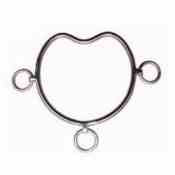
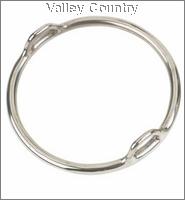
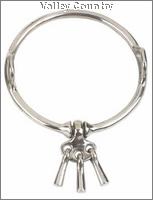
Occasionally racehorses are ridden in chifneys, but it is not particularly a suitable bit for riding in. You can also obtain for racehorses a "Dexter" bit which combines a chifney of sorts WITH a snaffle bit (shown below)
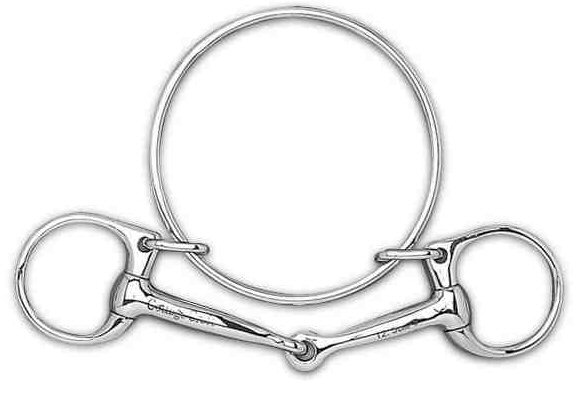
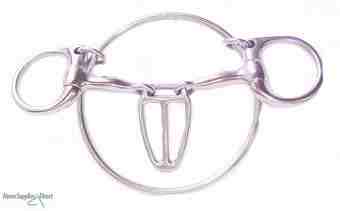
Above left: Dexter ring bit, above right: Dexter "tongue control" bit to prevent the racehorse from getting it's tongue over the bit.
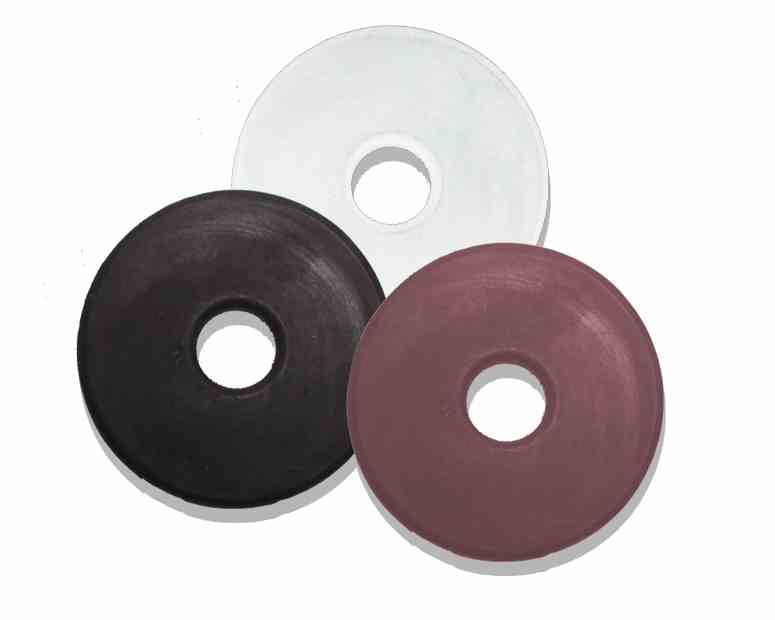
Extra bit devices: If a bit is slightly too wide, or pinches the lips, some people put rubber "biscuits" round the bit rings (shown below) to prevent rubbing. I am not in favour of this because it means that you are using the wrong size bit, or the bit is worn and has sharp edges, in which case you should use another one.
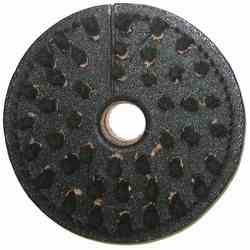
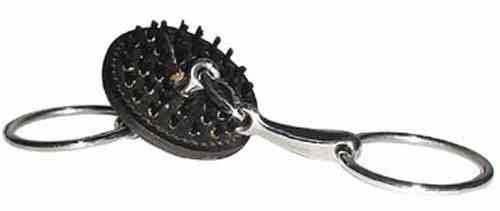
Another device is the bristle pricker or "bit burr" – a leather circular pad (shown below) that is sewn onto the bit, with bristles on the inside that irritate the horses face if he is stiff or pulling on one side. It is effective, but should be considered as a last resort after schooling, for extreme cases where professional checks on the back, neck, saddle, bridle and rider have already been thoroughly carried out.
Further to the Australian cheeker bridle and the hanging cheek snaffle mentioned earlier, for horses who get their tongues over the bit you can also buy a rubber device, also called a “tongue” or tongue port (shown below) which is wrapped around the centre of the bit, leaving a rubber flap lying on the tongue when it is in the horse’s mouth, this helps prevent the horse from moving his tongue towards the back of the mouth to put it over the bit. Sometimes in racing they will simply take some cord and tie the horse’s tongue to his jaw, but this is a harsh solution and not to be reccomended.
Below: more bits of interest.
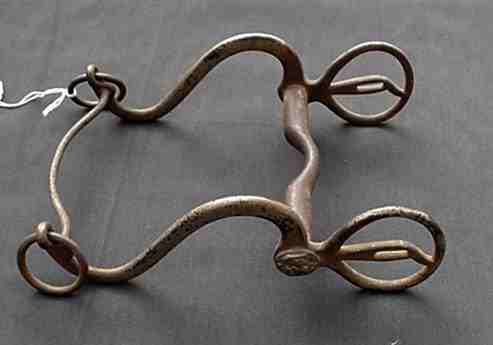
American Cavalry bit (a curb)
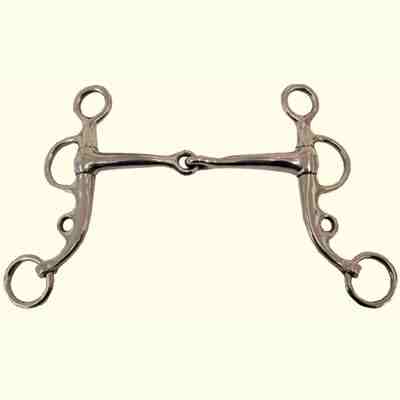
Argentine snaffle (curb) similar to the "Tom Thumb"
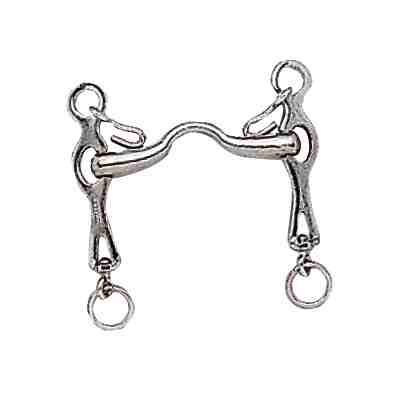
Portuguese Pelham (curb), note swivelling rings on the bottom of the shanks.
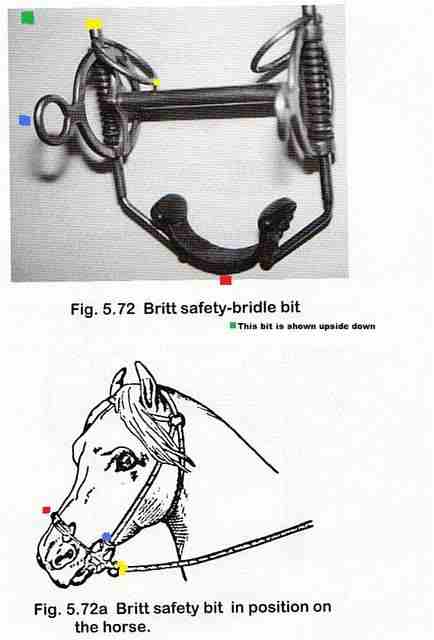
The Britt "safety" bridle bit - pulling on the reins hard causes the nubs on the noseband to press into the horse's nostrils, cutting off it's air supply and in theory, making it submit/stop in order to regain the ability to breathe.
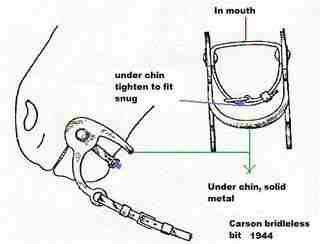
Carson "bridleless" bit - locking onto the horse's jaw, although it looks rather uncomfortable for the horse and I can imagine it may cause a sore jaw.
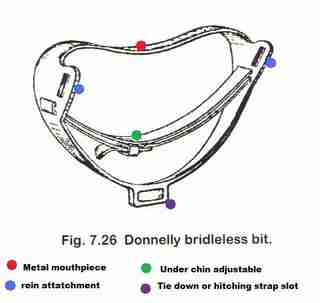
a variation on the above, a Donnelly "bridleless" bit - again I would imagine the jaw would become sore in time.
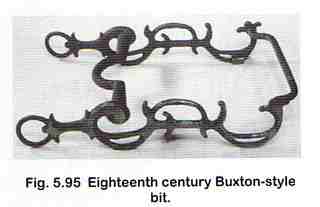
An antique driving bit - essentially a Buxton (curb), it looks more complicated than it is merely because of it's decoration.
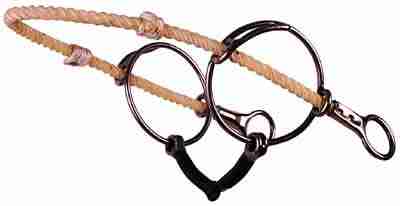
American "hank" bit, which has similar features to the "safety" bit shown above - the rope presses on the nose when the reins are pulled.
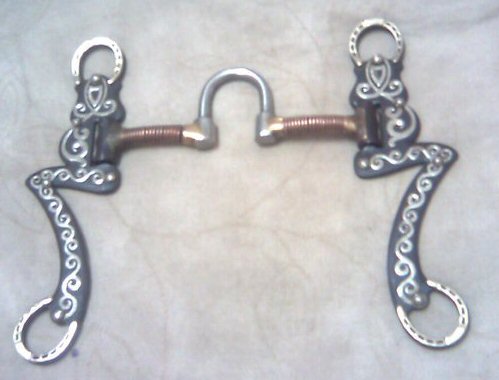
A decorative Indian bit - a high ported curb bit.
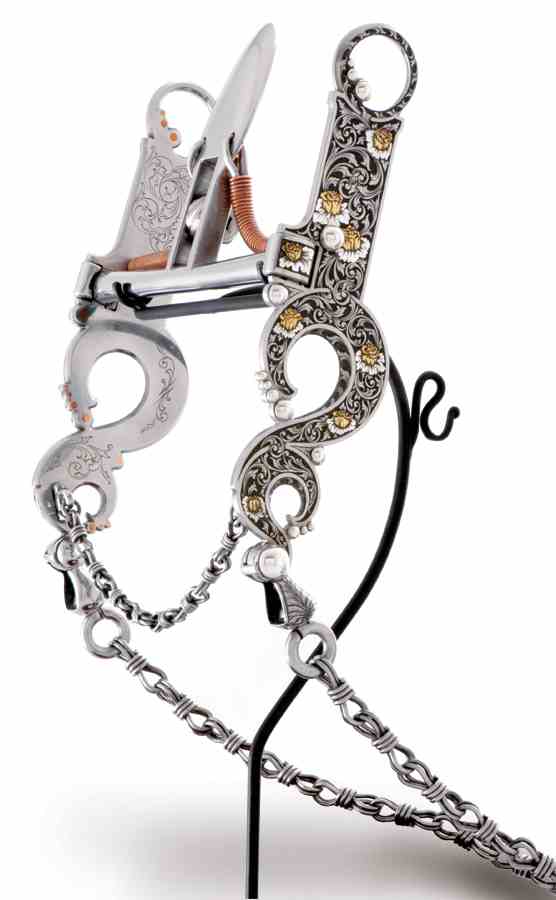
Another highly decorative bit "Santa Barbra Wilson Capron" - a curb bit with a huge tongue plate. The black piece is merely a support to display the bit - not part of the bit itself.
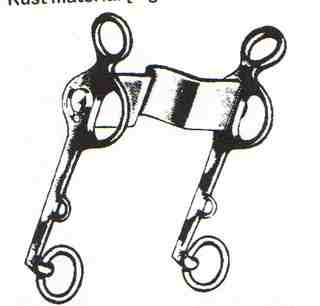
A "Rutledge" - a curb bit with a flat mouthpiece which lies against the tongue when passive, but when the reins are applied it slides in the mouth so that it simultaneously digs in to the tongue and the roof of the mouth
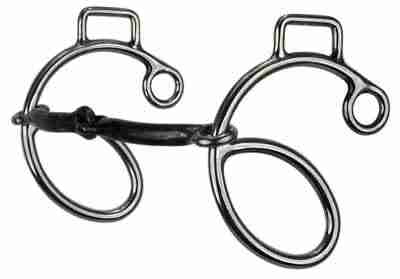
A "super six" bit, which incorporates both curb and gag elements.
Below, although not bits the following pieces of bridlework are mentioned for completeness, to show how different bridles can affect the action of a bit:
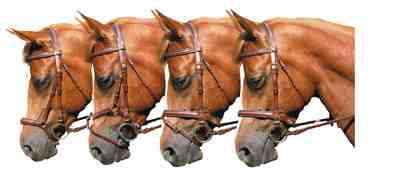
Above a selection of different nosebands with varying actions, (explained below). L-R: drop, grackle, flash and cavveson.
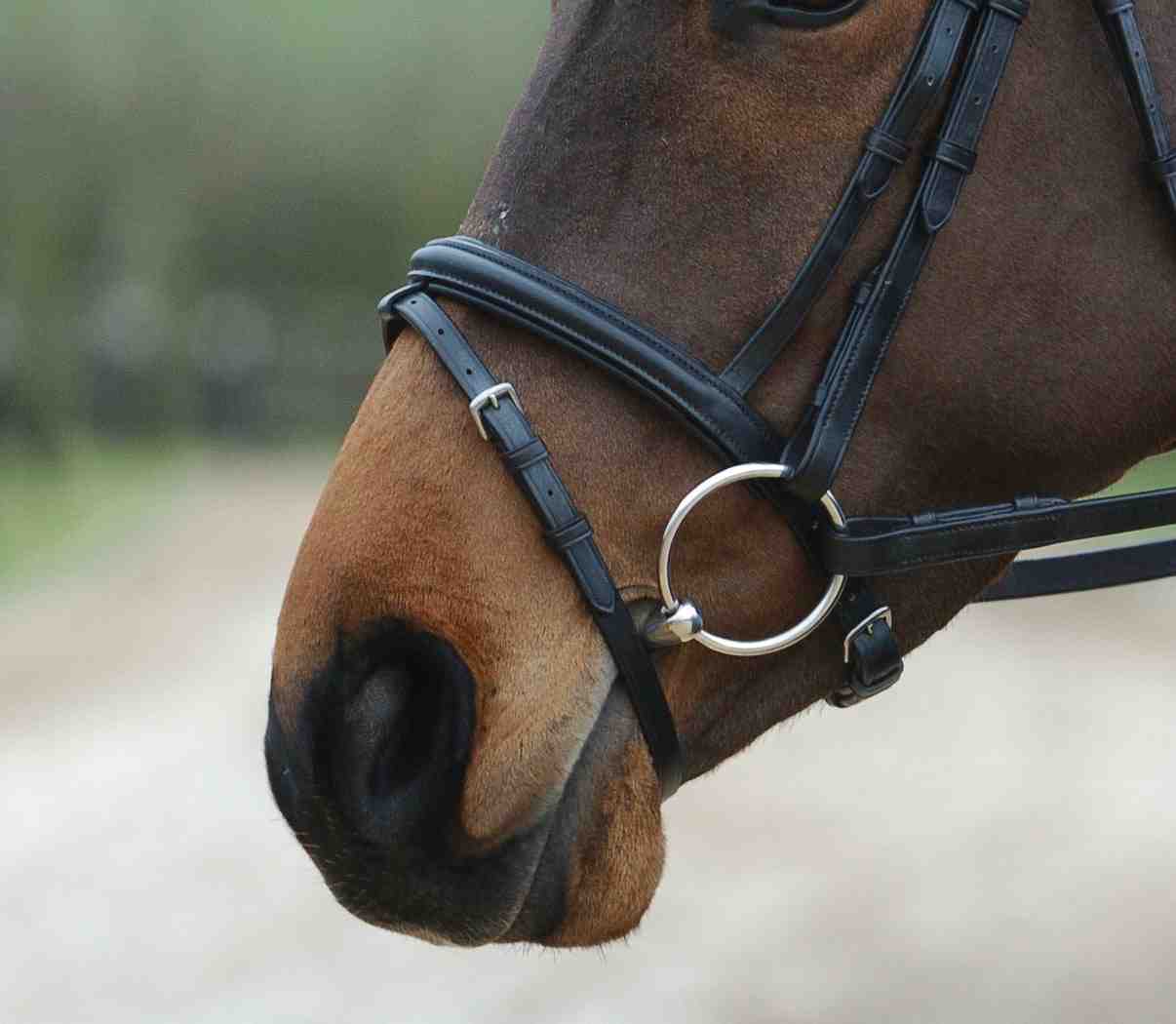
Above left: a flash noseband, which is a strap which fits through a tab on the noseband, which clamps the horse's jaw shut to prevent evasion of the bit, however it hides resistance caused by poor riding.
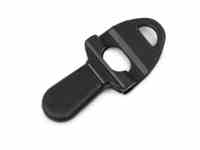
Above Right: a flash noseband attachment using a leather tab which folds over a regular noseband to allow fitment of a flash without buying a new noseband.
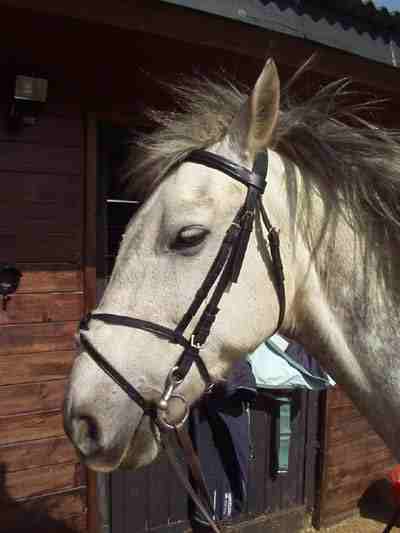
Above: a grackle noseband (incidentally with a hanging cheek snaffle) More severe than a flash (above) the noseband prevents the horse from opening his mouth to evade the bit, but can hide resitance caused by poor riding.
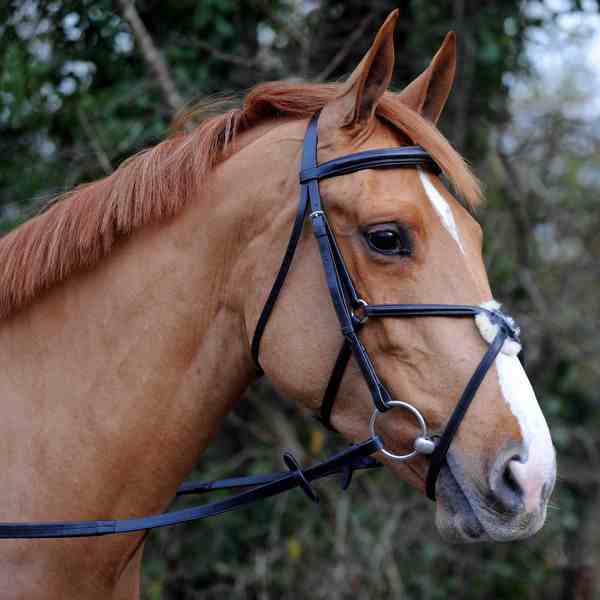
Above: A Mexican grackle noseband. Note the rings on the horse's cheeks - the metal so close to bone can cause bruising, so better designs often have leather and/or sheepskin pads behind the cheek rings as well as the cross over on the nose for extra comfort to prevent rubs on the horse's face. The Mexican grackle (or "high cheek" grackle) grasps the jaw shut higher than the traditional grackle.
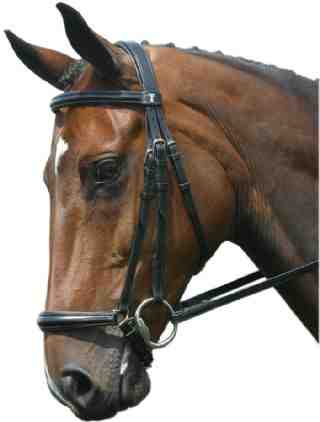
Above: a drop noseband, these were particulary fashionable in the 60s, 70's and early 80s, again they prevent the horse from opening his mouth to evade the bit, but can impede breathing as well by applying pressure to the nose and nostrils, so many people changed to using a flash noseband attachment instead (above) as it sits higher and does not impede the sensitive end of nose so much.
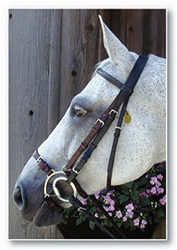
Above and below: the Crescent noseband, this works in a similar way to the grackle by preventing the horse from opening his jaws to evade the bit, again hiding resistance caused by poor riding.
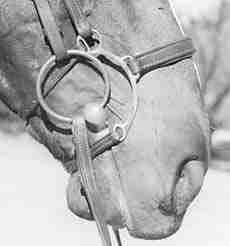
Above: the Kineton noseband, which transfers bit pressure to the nose, making a 50/50 bit and nose effect. useful for moving a horse between bitless and bitted bridles.
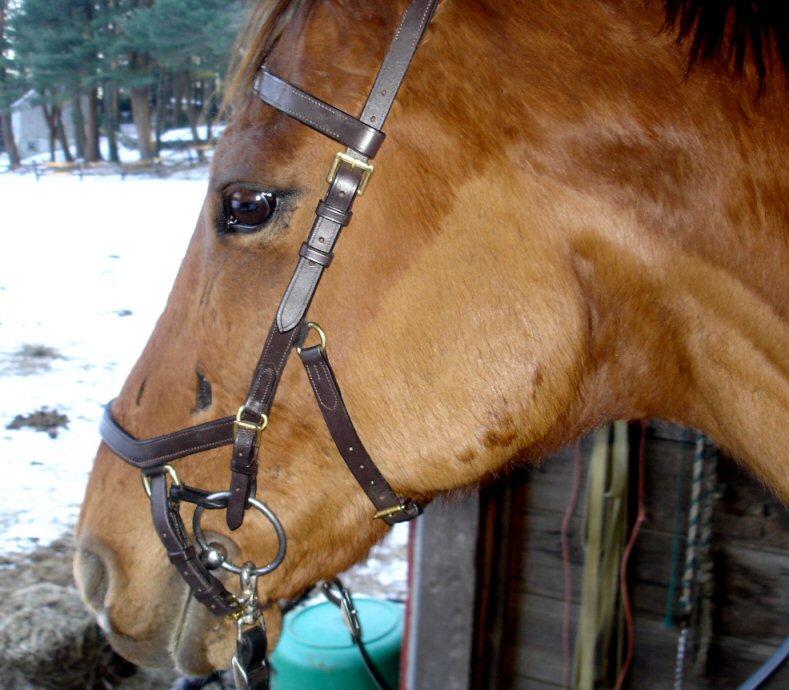
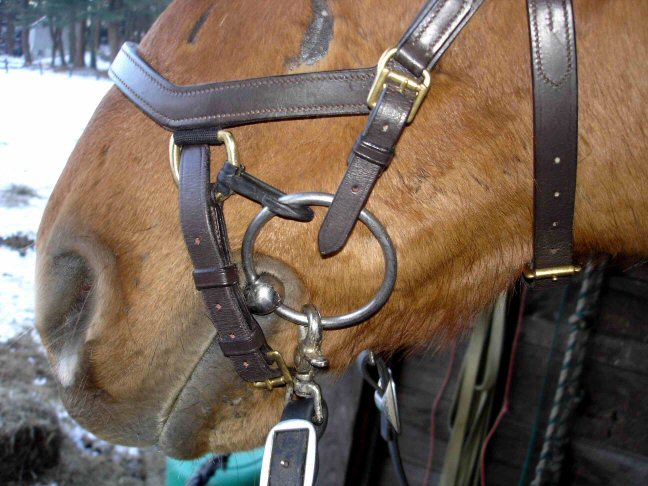
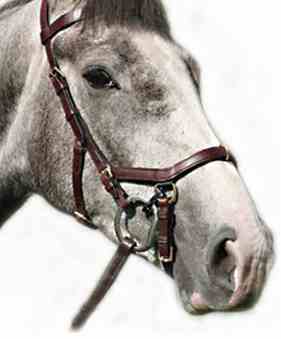
Above and below: the Micklem noseband, which again like the kineton transfers bit pressure to the nose, as well as acting like a drop noseband and grackle to keep the mouth shut.
About the Author: Kirsty Farnfield is a British horse riding instructor, qualifications include various British Horse Society examinations, a BTEC 1st Diploma (Distinction) in Horse Studies (Pre-Farriery) as well as Best Overall Student award from Warwickshire College of Agriculture, Certificate in Equine Reproductive Management, and is an A1 NVQ Assessor in Horse Care & Management (City & Guilds level 3 certificate in Assessing candidates using a range of methods, 7317). She has extensive experience working all over the world with various breeds and disciplines, including but not limited to Arabians, shires, cobs, thoroughbreds, warmbloods, other draught breeds, dressage and eventing horses, hunters, and working on studs, importing, competition, breaking, schooling, reschooling & remedial yards, livery yards, riding schools and trekking centres. Website at www.ukshires.net